
Should Small Business Owners Be Posting on LinkedIn? Here’s Why Your Personal Profile Matters
Should Small Business Owners Be Posting on LinkedIn? Here’s Why Your Personal Profile Matters
If you're a small business owner wondering whether you should be posting on LinkedIn, the answer is yes, but your Company Page shouldn't be the only place your business shows up. Your personal LinkedIn profile can be one of your most valuable business-building assets because it gives customers, partners, prospects, and peers the opportunity to connect with the person behind the company.
A Company Page still matters. LinkedIn describes Pages as the official presence of an organization, where businesses can showcase their brand, products, services, job opportunities, and updates. But a Page and a personal profile serve different purposes, and treating them as interchangeable can leave out an important part of your LinkedIn strategy underused.
For small businesses in particular, founder visibility can make the brand feel more credible, approachable, and memorable. In this guide, we'll look at LinkedIn personal profiles vs. Company Pages, why business owners should post, what to share, how employee and leadership visibility can extend your reach, and how to build a practical LinkedIn strategy without turning yourself into a full-time content creator.
Your Company Page Isn't Your Only LinkedIn Asset

Your Company Page Isn't Your Only LinkedIn Asset
Think of your LinkedIn presence as having two connected sides: the company and the people who represent it. Your Company Page gives your business an official home, while your personal profile gives people a way to understand the expertise, perspective, and personality behind that business.
This distinction matters because LinkedIn itself positions a Company Page as an organization's official presence, while personal profiles represent individual members. A Page can showcase your services and provide a place for people to verify and learn about your business, but your personal profile gives you the freedom to participate in conversations as a person rather than as a logo.
For a small business owner, that personal layer can be especially valuable. You are often the salesperson, strategist, subject-matter expert, relationship builder, and public face of the business all at once. Your LinkedIn activity can therefore become an extension of how you already build trust in real life.
Why People Connect With People Before Companies
People don't just want to know what a business sells. They often want to understand who is behind it, what that person believes, whether they understand the problem they're solving, and whether they seem like someone worth working with.
That is where founder-led content can complement your Company's Page activity. Instead of only announcing a new service, you can explain what led you to create it. Instead of simply sharing an industry statistic, you can add your perspective. Instead of publishing a generic company update, you can tell the story behind the decision.
Thought leadership research from Edelman and LinkedIn supports the broader business value of this approach. The 2025 B2B Thought Leadership Impact Report found that thought leadership can influence not only visible buyers but also "hidden buyers," or the people who may not be the primary user but can still influence purchasing decisions.
For a small business trying to compete with larger, more established companies, that matters. You may not have the biggest marketing budget or the most recognisable brand, but consistently demonstrating expertise can help people understand why your business deserves consideration.
What Should a Small Business Owner Post on LinkedIn?

What Should a Small Business Owner Post on LinkedIn?
The best LinkedIn content for business owners usually starts with a goal and what you already know. You don't need to invent a new thought-leadership topic every week when your everyday experience is already full of lessons, decisions, challenges, and observations that could be useful to your audience.
A useful way to think about founder content is to ask: "What would I tell a customer, colleague, or peer if we were having coffee?" That question can lead to content that sounds more natural than trying to write something that feels like a corporate press release.
Share Short, Useful Tips
Small, practical insights are often easier for your audience to understand and act on. If you are an accountant, you might explain a common financial mistake small businesses make. If you're a consultant, you might share a question every business owner should ask before starting a project.
The key is specificity. "Work smarter" isn't particularly useful, but "Before you hire your first marketing freelancer, ask these three questions" gives the reader something concrete to consider.
Talk About Lessons You've Learned
Running a business gives you access to experiences that your audience may not have. Share what surprised you, what changed your thinking, what you would do differently, or what a difficult situation taught you.
This type of content can be particularly effective for founder visibility because the value isn't simply the information, but the perspective behind it. You're allowing people to understand how you think.
Show the Business Behind the Brand
Behind-the-scenes content can help people understand what your company actually looks like beyond its website. You might show how a project comes together, introduce the people involved, explain a process, or share a milestone.
You don't need to make everything polished. Authenticity doesn't mean posting every detail of your personal life; it means showing enough of the real work that people can understand the people and thinking behind the business.
Share Client Wins Without Turning Them Into Advertisements
Customer stories can demonstrate your expertise without requiring a hard sales pitch. Instead of simply saying, "We're proud to announce that Client X achieved Y," explain the challenge, the approach, and the lesson that other businesses could take from the experience.
This makes the post useful even to someone who isn't ready to buy from you. It also gives prospective customers a clearer idea of how you approach problems.
Founder Visibility Should Support the Business, Not Compete With It
Founder Visibility Should Support the Business, Not Compete With It
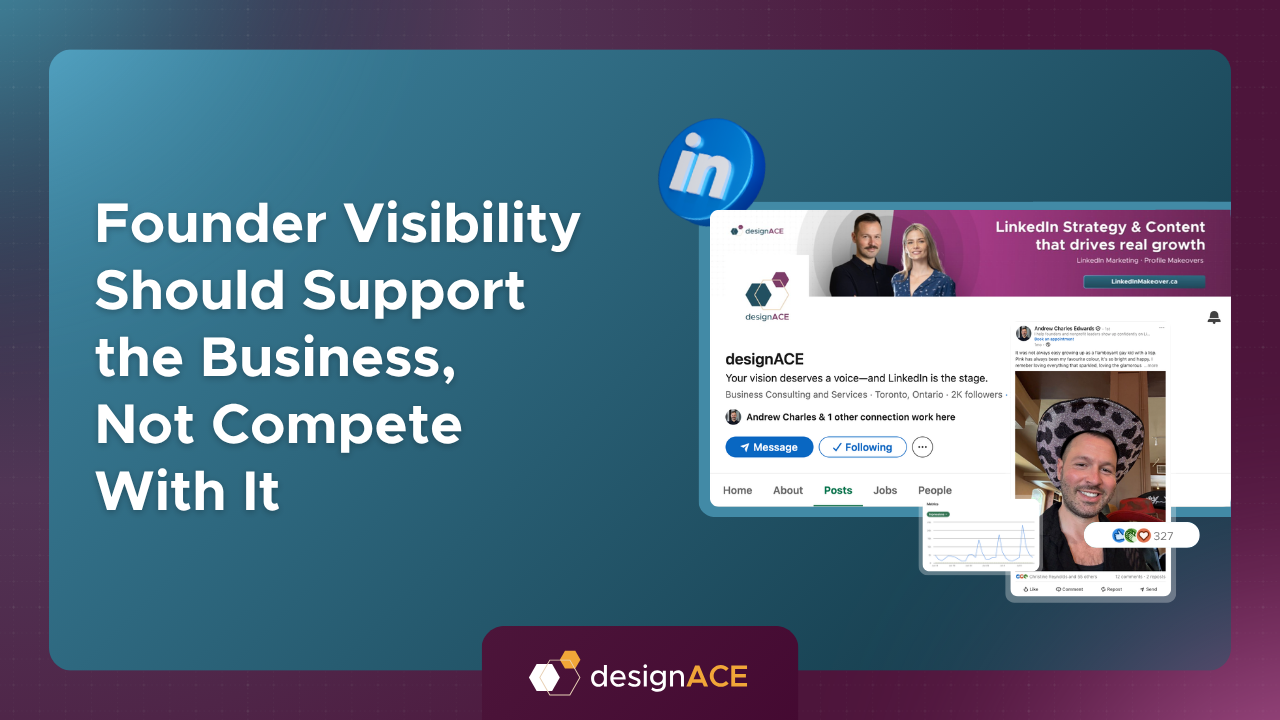
A common concern among business owners is that personal content will somehow overshadow the company. In reality, the two can reinforce each other when the relationship between your expertise and your business is clear.
Your personal profile can establish the point of view that resonates with your audience, while the Company Page can provide the proof and destination. If you're the founder of a marketing agency, for example, your profile might discuss what you've learned about small-business marketing, while the Company Page showcases your services, projects, and company updates.
The important distinction is that founder visibility shouldn't become personal branding for its own sake. It should ultimately help people understand the problems you solve, the expertise you bring, and why your business exists.
How Employee Advocacy Can Expand Your Reach
How Employee Advocacy Can Expand Your Reach
Founder visibility is only one part of a broader people-first LinkedIn strategy. If you have employees, leadership team members, partners, or other people closely connected to your business, their participation can help your content travel beyond the audience already following your Company Page.
LinkedIn's current Page tools allow administrators to notify employees about important Page posts, and employees can continue engaging with employer content and resharing it through their own profiles.
This is different from asking everyone to copy and paste the same corporate message. The stronger approach is to give people something worth talking about and allow them to add their own perspective.
For example, your company might publish a post about a new initiative. A team member could share it while explaining why the initiative matters to their role, while the founder could discuss the business decision behind it. The original content remains connected, but the people sharing it give the idea additional context and audiences.
A Simple LinkedIn Strategy for Small Business Owners

A Simple LinkedIn Strategy for Small Business Owners
You don't need to post every day to start building founder visibility. A sustainable strategy is more useful than setting an ambitious schedule that becomes impossible to maintain after a few weeks.
Start with one to two thoughtful personal posts per week if that is realistic for your schedule. Once you establish the habit, you can increase your cadence if your audience and business goals justify it.
Your weekly content could include one post that demonstrates expertise and another that shares a story, lesson, observation, or behind-the-scenes perspective. You can then support those posts by spending time engaging with relevant conversations rather than publishing and immediately disappearing.
LinkedIn itself says companies that post weekly see higher engagement, reinforcing the value of maintaining a consistent presence.
Use the 80/20 Content Rhythm
The 80/20 content rule of CEO Visibility on LinkedIn
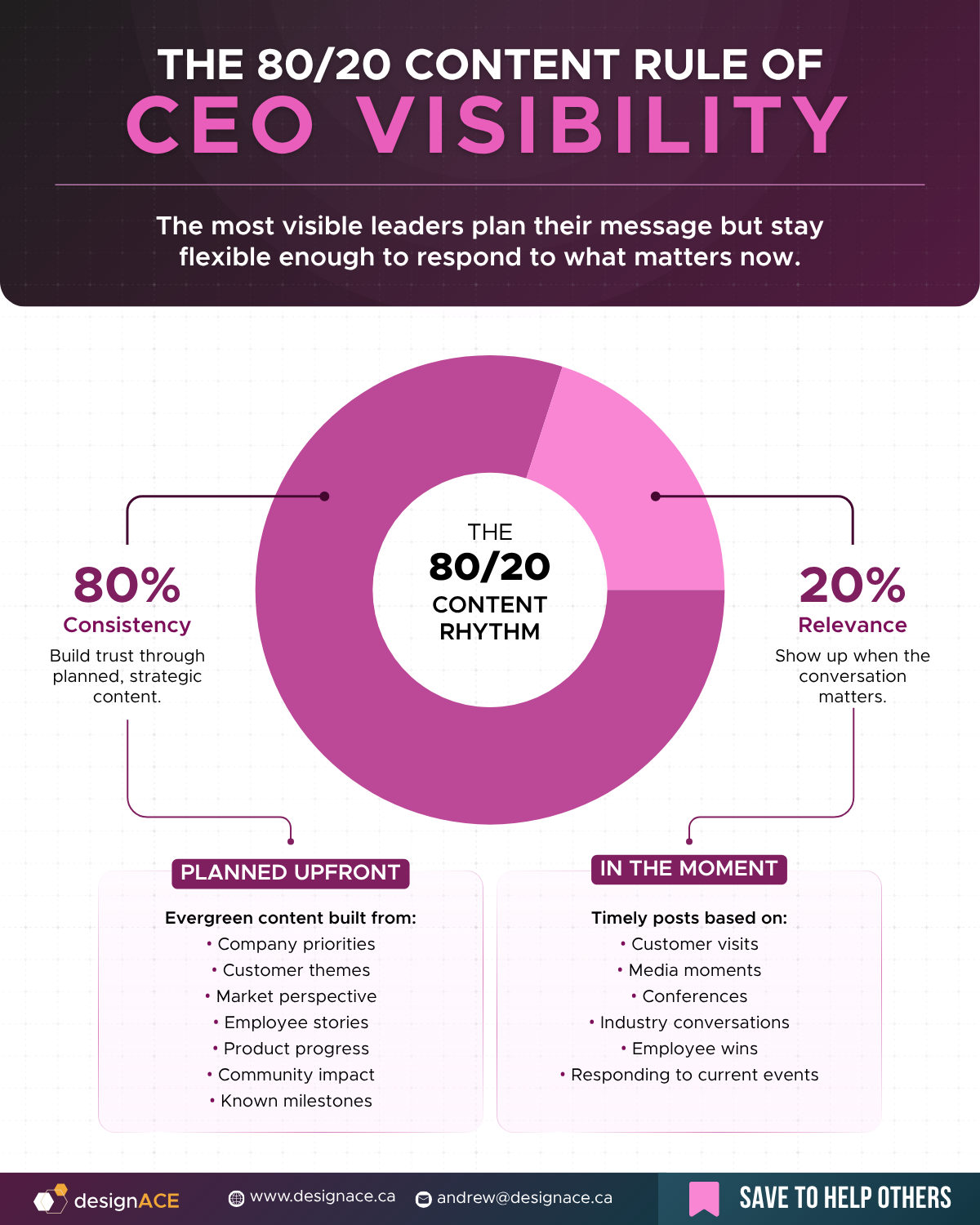
A strong LinkedIn content strategy needs both consistency and relevance. The 80/20 Content Rhythm gives small business owners a simple way to balance planned, strategic content with timely posts that respond to what is happening around their business, industry, and community.
80%: Planned Consistency | The majority of your content should be planned in advance around topics that consistently matter to your audience. This can include company priorities, customer themes, market perspectives, employee stories, product progress, community impact, and known milestones. Planning this content ahead of time gives you a reliable foundation and makes it easier to maintain a consistent presence without constantly wondering what to post.
20%: In-the-Moment Relevance | Leave room for content that responds to what's happening now. This could include customer visits, conferences, industry conversations, employee wins, media moments, or relevant current events. These posts allow your LinkedIn presence to feel current and responsive rather than overly scripted.
The goal isn't to follow the 80/20 split as a rigid rule. Instead, use it as a content rhythm: plan enough content to stay consistent while leaving enough flexibility to join conversations and share relevant moments as they happen. This balance helps your personal profile stay strategic without losing the human, timely perspective that makes founder-led LinkedIn content more engaging. To help you with content planning, we created a free content calendar template that you can download and use for free.
What If You Don't Have Time to Post as a Business Owner?

What If You Don't Have Time to Post as a Business Owner?
This is where the strategy needs to reflect reality. Running a small business already means managing customers, employees, finances, operations, and countless decisions, so adding "become a LinkedIn content creator" to your responsibilities may not be realistic.
You don't necessarily need to write every post yourself. What you do need to provide is the expertise, perspective, stories, and voice that make the content genuinely yours.
When LinkedIn Management or a Campaign Makes Sense
If LinkedIn is becoming an important channel for your business but you're struggling to maintain it, professional support can help turn scattered activity into a more deliberate system.
LinkedIn Marketing Campaign can be useful when you need ongoing support with content planning, writing, publishing, engagement, and performance analysis. This isn't simply to increase the number of posts, but to build a consistent presence that supports your broader business objectives.
And if you're not sure where your profile currently stands, a free LinkedIn Audit can provide a useful starting point. It can help identify opportunities in your positioning, profile, content, and overall LinkedIn presence before you decide whether you need ongoing support.
For business owners who know their expertise is valuable but don't have the time to communicate it consistently, LinkedInMakeover.ca, powered by designACE, can also help strengthen the personal profile that sits at the centre of that visibility strategy.
Quick Tips for Small Business Owners on LinkedIn
If you're starting from scratch, keep your approach simple:
Post from your personal profile: Use your own perspective to build familiarity and credibility.
Keep your Company Page active: Treat it as the official destination where people can verify and explore your business.
Teach before you sell: Give people useful reasons to follow you even when they aren't ready to buy.
Share your perspective: Your experience as a founder is valuable content.
Engage beyond your own posts: Participate in conversations where your ideal customers and peers are already active.
Involve your team: Give employees and leaders opportunities to add their own perspectives to company content.
Measure business-relevant signals: Look beyond follower count to profile visits, engagement, conversations, relevant connections, and enquiries.
Final Thoughts: Your Personal Profile Can Be a Business Asset
The strongest approach is to let your personal visibility and company presence work together. Share useful ideas, participate in industry conversations, make your expertise visible, and give people a reason to remember you. Over time, those interactions can create the familiarity and trust that turn LinkedIn from another social platform into a meaningful business-development channel. Thought leadership research from Edelman and LinkedIn continues to show that useful, credible perspectives can influence how buyers evaluate organizations and even create opportunities for less-established brands.
If you want to build that presence but don't have the time to manage it yourself, designACE can help through LinkedIn Management and Campaign Services, while a free LinkedIn Audit can help you identify where to start. We don’t aim to make more posts for the sake of posting, but to help turn your expertise and visibility into a consistent LinkedIn presence that supports your business.
Frequently Asked Questions (FAQs)
-
Your LinkedIn headline should do more than state your job title. It should clearly communicate what you do, who you help, and the value you provide, while naturally incorporating relevant keywords that improve your visibility in LinkedIn search results. A strong headline encourages people to click on your profile and learn more.
-
LinkedIn allows up to 2,600 characters for your About section, and it's worth using most of that space if it adds value. Focus on telling your professional story, highlighting your expertise, explaining who you help, and including relevant keywords naturally. Structure the content with short paragraphs or bullet points so it's easy to read on both desktop and mobile devices.
-
The easiest way to receive recommendations is to ask people you've genuinely worked with, such as colleagues, clients, managers, or business partners. Make the request as easy as possible by reminding them of projects you worked on together or suggesting a few areas they could mention. Offering to write a recommendation for someone else first is also a thoughtful way to start the conversation and often encourages them to return the favour.
-
Review your LinkedIn profile every few months or whenever there's a significant change in your career or business. Updating your headline, About section, featured content, recent projects, certifications, or recommendations helps ensure your profile stays accurate, reflects your current goals, and continues to represent your expertise effectively.
-
Absolutely. LinkedIn gives small businesses an opportunity to build credibility, showcase expertise, strengthen relationships, and connect directly with decision-makers. A well-optimized profile, combined with valuable content and consistent engagement, can help generate leads, attract partnerships, increase referrals, and create meaningful business opportunities over time.
Useful Blogs


LEVEL UP YOUR LINKEDIN PROFILE
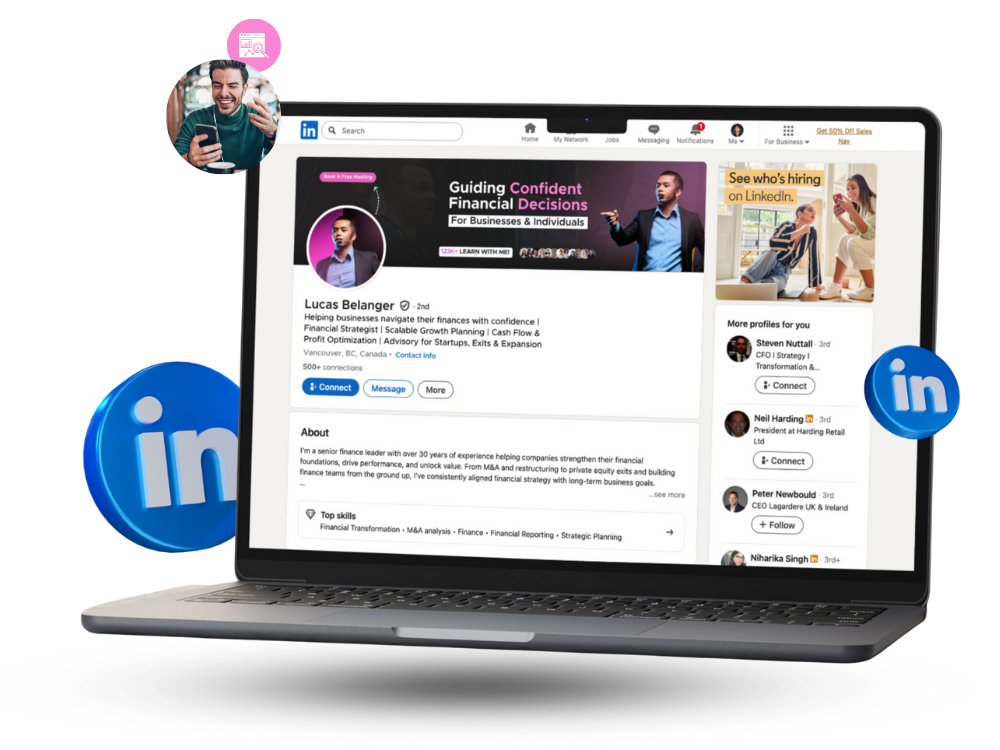
Enhance your LinkedIn presence and attract more opportunities with a profile designed to stand out.
PICK YOUR MAKEOVER
Discover why small business owners should post on LinkedIn and how founder visibility can turn expertise into trust, connections, and business opportunities.