
7 Proven Ways to Increase LinkedIn Engagement and Followers for Your Small Business

7 Proven Ways to Increase LinkedIn Engagement and Followers for Your Small Business
Posting regularly on LinkedIn doesn't always translate into meaningful growth. Many small businesses invest time creating content, yet struggle to attract followers, spark conversations, or generate business opportunities because their efforts focus on publishing more rather than engaging better. On LinkedIn, visibility isn't earned by volume alone, it's earned by relevance, consistency, and genuine interaction.
While growing your follower count can expand your potential reach, engagement is what tells LinkedIn your content is worth showing to more people. Every comment, share, save, and meaningful conversation signals value to the platform, helping your content reach audiences beyond your existing network. That's why businesses with smaller but highly engaged communities often outperform larger pages with thousands of passive followers.
In this guide, I'll share seven proven strategies to help your small business increase LinkedIn engagement and grow followers organically. From optimising your Profile and Company Page and creating content people want to interact with to encouraging employee advocacy, using analytics, and knowing when paid promotion makes sense, you'll learn practical steps that can help turn your LinkedIn presence into a channel for long-term business growth.
For a complete and detailed step-by-step guide, download our free 4-part LinkedIn Playbook. It covers topics from LinkedIn profile optimization, content creation, outreach that feels human, and analytics.
Optimize Your LinkedIn Page Before You Chase More Followers

Optimize Your LinkedIn Page Before You Chase More Followers
ABefore you focus on growing your follower count, make sure your LinkedIn Company Page gives people a reason to follow in the first place. Every visit to your page is an opportunity to build trust, communicate your value, and encourage someone to stay connected. If your page is incomplete or inconsistent, even the best content strategy will struggle to convert visitors into followers.
Think of your Company Page as your business's digital storefront. When potential customers, partners, or future employees click through, they should immediately understand who you help, what you offer, and why they should keep your business on their radar.
Complete Every Section of Your Company Page
A complete LinkedIn Company Page improves both credibility and discoverability. LinkedIn uses the information on your page to understand your business and surface it in relevant searches, while visitors use it to decide whether your business is worth following or contacting.
Start by writing an About section that clearly explains what your business does, who you serve, and the value you provide. Naturally incorporate industry keywords throughout the copy so your page aligns with the types of searches your ideal audience is likely to perform. Rather than writing for search engines alone, focus on making the description useful and easy to understand.
Next, review the remaining sections of your page. Ensure your services are up to date, include a clear call to action that directs visitors to your website or booking page, and confirm your contact information is accurate and easy to find. These details may seem small, but together they create a more complete and trustworthy experience that encourages people to engage with your business.
Make Your Banner and Branding Work Harder
Your banner is often one of the first visual elements people notice, yet many businesses either leave it blank or treat it as decorative artwork. Instead, use this space to reinforce your brand, communicate your value proposition, and create a memorable first impression.
Maintain a consistent visual identity by using your brand colours, typography, and imagery across your LinkedIn Page and other marketing channels. A banner that clearly reflects what your business does makes it easier for visitors to recognise your brand and understand your expertise within seconds. Consistency also helps strengthen brand recall, especially as people encounter your business across multiple touchpoints.
If your branding or messaging no longer reflects where your business is today, it may be worth refreshing your LinkedIn presence before investing heavily in content promotion. At designACE, we've found that businesses often see stronger engagement when their visual identity and messaging work together. And if you're looking to strengthen your personal profile alongside your Company Page, LinkedInMakeover.ca(powered by designACE) helps professionals optimize their positioning, profile messaging, banners, and featured sections to create stronger first impressions and attract more meaningful opportunities.
Create a Consistent LinkedIn Content Strategy

Create a Consistent LinkedIn Content Strategy
A polished LinkedIn Page may encourage people to follow you, but it's your content that gives them a reason to stay. Consistent, valuable content keeps your business visible, reinforces your expertise, and creates more opportunities for people to engage with your brand over time. The goal isn't to post simply to fill a content calendar, but to publish content that informs, starts conversations, and supports your business objectives.
Consistency Builds Visibility
One of the biggest reasons small businesses struggle to grow on LinkedIn is inconsistency. Posting several times one week and then disappearing for a month makes it difficult to build momentum with both your audience and LinkedIn's algorithm. A steady publishing rhythm signals that your business is active and gives followers something to look forward to.
For most small businesses, a cadence of three to five posts per week strikes a practical balance between visibility and sustainability. More importantly, focus on delivering value with every post rather than trying to publish as often as possible. A few thoughtful, well-crafted posts that educate, inspire, or solve problems will almost always outperform a stream of promotional updates with little relevance to your audience.
Prioritise Native LinkedIn Content
LinkedIn generally favours content that keeps users on the platform, making native formats an important part of your content strategy. Instead of relying primarily on external links, mix your content with formats designed for LinkedIn's feed to encourage more interaction and longer viewing time.
Simple text posts are ideal for sharing insights, lessons learned, and industry perspectives that spark conversation. Documents and carousels work particularly well for educational content because they encourage people to spend more time engaging with your post while providing information that's easy to save and share. Short native videos continue to gain traction by adding personality to your brand and allowing your audience to connect with the people behind the business. Rather than choosing one format, experiment with a combination to discover what resonates most with your audience.
Test Different Posting Times
There's no universal "best" time to post on LinkedIn because every audience behaves differently. While many businesses see strong engagement during weekday mornings or around lunchtime, your ideal posting schedule depends on factors such as your industry, your audience's location, and when your followers are most active.
Start by testing morning and afternoon publishing windows over several weeks while keeping your content quality consistent. Then review your LinkedIn analytics to compare impressions, engagement, and follower growth across different times. Treat each change as a small experiment and let the data guide your decisions rather than relying solely on general benchmarks. Over time, you'll identify the posting schedule that works best for your business, and not someone else's.
Once your LinkedIn analytics tells you when your target audience is most active and most likely to engage with your content, it's ideal to post 30 minutes to 1 hour before your peak engagement time. This gives LinkedIn enough time to distribute your content and make it visible to your audience when they're most likely to engage.
Turn Employees Into Your Biggest Growth Channel
Turn Employees Into Your Biggest Growth Channel
One of the most effective ways to grow your LinkedIn presence isn't by publishing more content, but by helping more people see it. While your Company Page has its own audience, your employees, leadership team, and ambassadors collectively have networks that can significantly expand your reach. When they actively engage with your content, they introduce your business to new audiences in a way that feels more personal and credible than a company page alone.
Employee advocacy isn't about asking everyone to become influencers. It's about making it easy for the people behind your business to participate in conversations and share content they genuinely believe is valuable.
Why Employee Advocacy Works
People are more likely to engage with content shared by individuals than by brands alone. When employees like, comment on, or share a company post, that activity often exposes the content to their own professional networks, creating a ripple effect that increases visibility and encourages new people to discover your business.
This additional reach also sends positive engagement signals to LinkedIn's algorithm. The more authentic interactions your content receives shortly after it's published, the greater its potential to appear in more users' feeds. Over time, this can contribute to stronger engagement, increased page followers, and greater brand awareness without increasing your advertising budget.
Encourage Leadership Participation
Your leadership team can play an especially important role in extending your reach. Posts shared or commented on by founders, executives, or department leaders often generate more meaningful conversations because people naturally connect with people before they connect with brands.
Encourage leaders to share company updates alongside their own insights or experiences rather than simply reposting content without context. Adding a personal perspective makes the content feel more authentic, encourages discussion, and helps strengthen both their personal brand and your company's visibility at the same time.
Make Sharing Easy
Employee advocacy works best when participation is simple and voluntary. Rather than expecting employees to create their own content from scratch, provide ready-to-share resources such as suggested captions, key messages, campaign hashtags, images, or links that they can personalize in their own voice.
It's also helpful to let employees know when new content is published so they can engage early if they choose. Even a few thoughtful comments, reactions, or shares within the first day can help generate momentum and encourage wider distribution. The objective isn't to manufacture engagement; it's to make it easier for your team to support the stories your business is already telling.
Engagement Drives More Reach Than Posting Alone

Engagement Drives More Reach Than Posting Alone
Publishing valuable content is only one part of growing on LinkedIn. What happens after you publish often has an even greater impact on your visibility. Every reply, comment, and conversation tells LinkedIn that people are finding your content valuable, increasing the likelihood that it will continue reaching new audiences. In other words, engagement isn't just the outcome of a successful post, but rather a part of the strategy that helps extend its reach.
If your goal is to increase engagement and followers, don't treat LinkedIn like a broadcasting platform. The businesses that consistently perform well are the ones that actively participate in conversations, both on their own content and across their industry. That's why at designACE, we encourage small businesses, founders, and entrepreneurs to engage before publishing a content.
Respond Quickly to Comments
When someone takes the time to comment on your post, they're opening the door to a conversation. Responding promptly shows that your business is active, approachable, and genuinely interested in engaging with its audience rather than simply collecting likes.
Thoughtful replies also encourage additional discussion, which can keep your post active for longer and expose it to more people. Even a simple follow-up question or acknowledgement can extend the conversation and create stronger relationships with both existing followers and new visitors.
Join Industry Conversations
You don't have to wait for people to find your content before engaging with them. One of the easiest ways to increase your visibility is by contributing meaningful comments to posts shared by industry leaders, partners, clients, and organizations your audience already follows.
Rather than leaving generic responses like "Great post!" or "Thanks for sharing," add your own perspective, ask thoughtful questions, or expand on the discussion. Valuable comments can attract profile visits, introduce your business to new networks, and position you as someone worth following—even if you've never published a post yourself.
Build Relationships Before Selling
One of the biggest mistakes businesses make on LinkedIn is treating every interaction as a sales opportunity. While LinkedIn can generate leads, those opportunities usually come from trust built over time rather than immediate promotion.
Focus first on creating relationships by sharing helpful insights, celebrating others' successes, answering questions, and participating in conversations without expecting an immediate return. When people consistently see your business adding value, they're far more likely to remember your brand, engage with your content, and eventually reach out when they need the products or services you offer.
Use LinkedIn Analytics to Improve Every Month

Use LinkedIn Analytics to Improve Every Month
Growing your LinkedIn presence isn't about finding a single tactic that works forever—it's about continually learning from your results. Analytics help you understand what resonates with your audience, allowing you to make informed decisions instead of relying on assumptions. Over time, small, data-driven improvements can significantly increase your engagement, follower growth, and lead generation.
Rather than changing your entire strategy every month, review your performance regularly and make one or two intentional adjustments. This iterative approach helps you identify what works for your business while building a content strategy that's both sustainable and effective.
Measure What Matters
Not every metric deserves equal attention. While it's easy to focus on vanity metrics like total followers, the most valuable insights come from understanding how people actually interact with your content and whether it supports your business goals.
Pay close attention to and understand key LinkedIn metrics such as impressions, engagement rate, follower growth, and clicks. These metrics provide a clearer picture of than any single number alone. For example, a post with fewer impressions but a much higher engagement rate often delivers more business value than one that simply reaches a larger audience.
Save Time Without Losing Consistency
Save Time Without Losing Consistency
Between running the business, serving customers, and managing day-to-day operations, LinkedIn often becomes an afterthought. Fortunately, a few simple tools and workflows can help you maintain a regular posting schedule without adding hours to your week.
Scheduling your content in advance also gives you more time to focus on what matters most: engaging with your audience. Instead of rushing to create a post each day, you can plan ahead, stay consistent, and dedicate your energy to building meaningful conversations. Plus, it helps you align their goals, track performance, and stay consistent (HubSpot, 2025).
LinkedIn's Native Scheduler
If you're just getting started, LinkedIn's built-in scheduling feature is an excellent place to begin. It allows you to prepare posts in advance and publish them automatically, helping you maintain a consistent posting cadence even during busy periods.
The native scheduler is particularly useful for businesses that primarily publish on LinkedIn and don't need advanced automation features. Combined with a simple monthly content plan, it removes much of the stress associated with posting manually every day.
Third-Party Scheduling Tools
If you're managing multiple social media platforms or working with a marketing team, third-party scheduling tools can provide additional flexibility. Platforms such as Buffer, Hootsuite, Sprout Social, or Later allow you to schedule content across channels, collaborate with teammates, and monitor engagement from a single workspace.
Many of these tools also offer reporting features that make it easier to compare post performance over time. Instead of manually reviewing each post, you can quickly identify trends in engagement, follower growth, and content performance to inform future decisions.
Start With One Dashboard
You don't need a complex marketing technology stack to stay organized. Start with one scheduling tool and one reporting dashboard where you can plan your content, monitor key metrics, and review what's working each month.
A simple system is often easier to maintain than a sophisticated one that never gets used. If you're posting with LinkedIn's native scheduler, pairing it with a structured content calendar can help you stay consistent while reducing last-minute planning. If you're looking for an easy place to start, download our free LinkedIn Content Planner, designed to help small businesses organise ideas, schedule posts, and build a sustainable content strategy.
Should Small Businesses Use LinkedIn Ads?

Should Small Businesses Use LinkedIn Ads?
As your LinkedIn presence grows, it's natural to wonder whether organic content is enough or if it's time to invest in paid advertising. The answer depends on your goals. For most small businesses, organic marketing should be the foundation because it builds credibility, trust, and long-term relationships. Paid campaigns, on the other hand, can help you amplify that foundation by reaching the right audience more quickly.
Rather than viewing organic and paid marketing as competing strategies, think of them as complementary. The strongest LinkedIn strategies often use organic content to establish authority and paid promotion to expand its reach.
Organic vs Paid LinkedIn Marketing
Organic LinkedIn marketing is the process of growing your audience naturally through valuable content, meaningful conversations, and consistent engagement. Every educational post, customer success story, industry insight, or thoughtful comment helps build trust with your audience over time. While organic growth takes patience, it often delivers stronger long-term returns because you're building a community that chooses to engage with your business rather than being interrupted by an advertisement.
Organic content also helps position your business as a trusted voice in your industry. As your audience becomes familiar with your expertise and consistently sees value in your content, you're more likely to earn recommendations, referrals, repeat engagement, and inbound enquiries. This is why many businesses prioritise thought leadership and community building before increasing their advertising spend.
Paid LinkedIn marketing can accelerate growth when you already have a clear objective. Sponsored Content, Lead Generation Ads, Event Ads, and Follower Ads can help you introduce your business to new audiences, promote webinars or events, generate qualified leads, or support product launches with greater precision than organic reach alone.
The biggest advantage of paid promotion is speed. Instead of waiting for content to gain momentum organically, you can target decision-makers based on industry, job title, company size, location, and other professional attributes. This makes LinkedIn advertising particularly valuable for businesses running time-sensitive campaigns or looking to reach highly specific buyer personas.
The Best Results Come From Both
For most small businesses, the best approach is to build a strong organic presence first and then use paid promotion strategically. When potential customers discover your sponsored content, they'll often visit your Company Page or profile before deciding whether to engage. If they find consistent, valuable content and an active presence, they're much more likely to follow your business, trust your expertise, and take the next step.
If your budget allows, consider boosting your highest-performing organic posts rather than promoting every piece of content. Analytics can help you identify which posts already resonate with your audience, allowing you to invest in content that's proven to generate engagement. This balanced approach helps maximise your advertising spend while continuing to strengthen the authentic relationships that drive sustainable LinkedIn growth.
Quick Tips: A Simple 30-Day LinkedIn Growth Plan
If you're unsure where to begin, focus on building a strong foundation before chasing rapid growth. A consistent, repeatable process will deliver better long-term results than trying to do everything at once.
Complete and optimize your LinkedIn Company Page, including your About section, banner, services, and call to action.
Create a 30-day content plan and aim to publish 3–5 valuable posts per week.
Encourage employees and company leaders to like, comment on, and share your posts during the first two weeks to expand your reach organically.
Review your engagement rate and follower growth each week, then use those insights to refine your content strategy for the following month.
Final Thoughts
Growing your small business on LinkedIn isn't about chasing viral posts or accumulating followers as quickly as possible. The businesses that see lasting success are the ones that consistently create valuable content, engage with their communities, measure what works, and refine their strategy over time. When you focus on building trust first, follower growth and business opportunities naturally follow.
If you'd like personalized guidance, book a free LinkedIn Audit with designACE to discover where your Page and content can improve. And if you're ready to take the next step, explore our LinkedIn Services that help businesses build a stronger LinkedIn presence through strategic content, employee advocacy, and sustainable growth that aligns with your business goals.
Frequently Asked Questions (FAQs)
-
Your LinkedIn headline should do more than state your job title. It should clearly communicate what you do, who you help, and the value you provide, while naturally incorporating relevant keywords that improve your visibility in LinkedIn search results. A strong headline encourages people to click on your profile and learn more.
-
LinkedIn allows up to 2,600 characters for your About section, and it's worth using most of that space if it adds value. Focus on telling your professional story, highlighting your expertise, explaining who you help, and including relevant keywords naturally. Structure the content with short paragraphs or bullet points so it's easy to read on both desktop and mobile devices.
-
The easiest way to receive recommendations is to ask people you've genuinely worked with, such as colleagues, clients, managers, or business partners. Make the request as easy as possible by reminding them of projects you worked on together or suggesting a few areas they could mention. Offering to write a recommendation for someone else first is also a thoughtful way to start the conversation and often encourages them to return the favour.
-
Review your LinkedIn profile every few months or whenever there's a significant change in your career or business. Updating your headline, About section, featured content, recent projects, certifications, or recommendations helps ensure your profile stays accurate, reflects your current goals, and continues to represent your expertise effectively.
-
Absolutely. LinkedIn gives small businesses an opportunity to build credibility, showcase expertise, strengthen relationships, and connect directly with decision-makers. A well-optimised profile, combined with valuable content and consistent engagement, can help generate leads, attract partnerships, increase referrals, and create meaningful business opportunities over time.
Useful Blogs

LEVEL UP YOUR LINKEDIN PROFILE
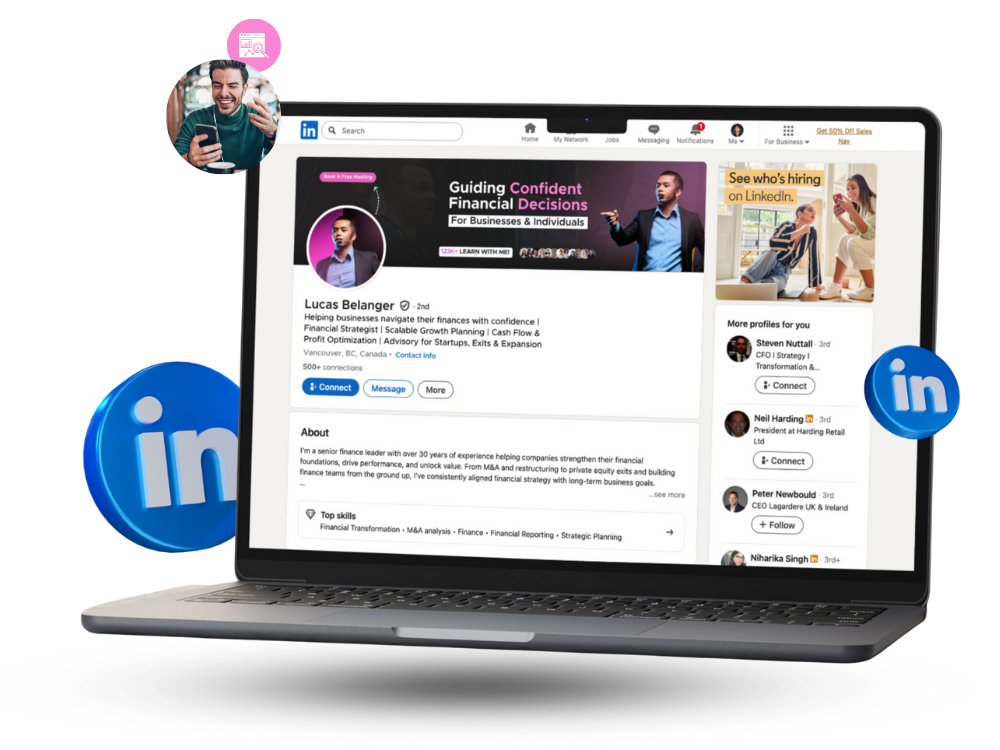
Enhance your LinkedIn presence and attract more opportunities with a profile designed to stand out.
PICK YOUR MAKEOVER
Learn how to build a standout LinkedIn profile as a new graduate by showcasing your skills, projects, education, and potential.