
How to Use LinkedIn as a College or University Student: 7 Things to Do Before You Graduate

How to Use LinkedIn as a College or University Student: 7 Things to Do Before You Graduate
If you're wondering how to use LinkedIn as a college or university student, you don't need to wait until graduation, your first internship, or your first full-time job to get started. LinkedIn can help you build your professional identity while you're still in school, giving recruiters, alumni, employers, and potential connections a clearer picture of who you are and where you're headed.
Your LinkedIn profile doesn't need to look like you've already spent ten years in the workforce. Your post secondary education, coursework, academic projects, student organizations, volunteer work, certifications, and career interests can all help demonstrate what you bring to the table. This will help you to start building a professional presence before you need it, rather than scrambling to create one when you're suddenly applying for jobs.
Don’t know where to start? Download our free four-part LinkedIn Playbook and follow the step-by-step instructions to learn more about LinkedIn profile optimization, content creation, outreach and connection, and analytics to track your progress.
Why College Students Should Start Using LinkedIn Before Graduation

Why College Students Should Start Using LinkedIn Before Graduation
Starting early also gives you time to experiment. You can gradually improve your profile, add new certifications, document projects, connect with alumni, and learn how professionals in your target industry communicate. By the time you graduate, your LinkedIn profile can already tell a much stronger story than simply listing your degree and university. By making small updates throughout your studies, you’ll keep everything current and save yourself the time and effort of updating it all at once after graduation.
You also don't need extensive work experience to create a credible profile. At designACE, we've worked with organizations such as Roots Community Services to help emerging and established leaders build stronger LinkedIn profiles, including people who are starting from zero. Through quarterly training for Black Leaders of Tomorrow (BLT), we focus on helping participants understand how to present their experience, skills, and professional goals with confidence.
Here are seven things you can do before graduation to start building that foundation.
1. Add a Presentable Photo and Custom Banner

Add a Presentable Photo and Custom Banner
Your LinkedIn profile photo is one of the first things people see when they visit your profile, so it should make you look approachable and professional. You don't need an expensive studio photoshoot or a perfectly staged corporate portrait; a clear, well-lit photo where your face is easy to recognize is enough to create a strong first impression. LinkedIn itself notes that profiles with a photo receive more profile views and connection requests, making a profile photo a worthwhile starting point.
Choose clothing that makes sense for the type of career you're pursuing. If you're entering a corporate, finance, consulting, or professional services environment, a more polished look may be appropriate, while students entering creative or less formal industries can allow more personality into their photo. The important thing is that the image looks intentional, current, and recognizably you.
Your background banner is another opportunity to communicate what you're interested in before someone even reads your profile. Use a tool such as Canva to create a simple banner that reflects your major, career direction, campus involvement, portfolio, or an area of expertise you're developing.
Don't overcomplicate the design. Your banner should support your profile rather than compete with your name, photo, or headline, so keep the message clear and the visual treatment consistent with the professional identity you want to build. We’ve created a free LinkedIn banner templateto help you start making your profile professional.
2. Optimize Your LinkedIn Headline With Keywords

Optimize Your LinkedIn Headline With Keywords
One of the easiest ways to improve your LinkedIn profile as a student is to move beyond a generic headline such as "Business Student at ABC University." While your university is important, that description doesn't tell a recruiter or potential connection what you're interested in, what skills you're developing, or what type of opportunity you're looking for.
Instead, combine your current status with relevant career keywords and areas of expertise to build a value-driven headline. Think about the roles, industries, and skills you want to be associated with after graduation. For example, a finance student interested in financial analysis could use something like "Finance Student | Aspiring Financial Analyst | Excel & Python" rather than simply stating their degree. This gives people more context while incorporating terms that may be relevant to the opportunities you're pursuing.
Your headline shouldn't become a list of keywords, though. The strongest version combines discoverability with a clear sense of direction, helping someone understand both where you are now and where you're hoping to go. You can start by doing the 40-20-10-5 framework to help you understand your strongest keywords and use them to help you tell your clear value and proposition in under 220 characters.
3. Customize Your Public LinkedIn Profile URL

Customize Your Public LinkedIn Profile URL
Your LinkedIn profile URL may seem like a minor detail, but cleaning it up makes your profile easier to share on your résumé, portfolio, email signature, and other professional materials. LinkedIn allows members to customize the public portion of their profile URL, and the platform recommends using a variation of your name or professional brand.
Instead of sharing a long URL containing random numbers and characters, aim for something simple based on your name, such as linkedin.com/in/yourname. This is particularly useful when you're applying for internships, co-op placements, graduate roles, or scholarships. LinkedIn notes that some job applications may ask for your public profile URL, so having a clean, recognizable link is one small way to make your professional presence more polished.
To customize your LinkedIn profile URL, simply go to your profile page, click the edit icon next to Public profile & URL on the upper-right hand side, click the edit icon below the Edit your custom URL on the right panel, and you customize your URL.
4. Tell a Story in Your LinkedIn About Section

Tell a Story in Your LinkedIn About Section
Your About section is where you can explain who you are beyond your degree. LinkedIn describes this section as a place to express your mission, motivation, and skills, which makes it particularly useful for students who need to provide context around experiences that may not fit neatly into a traditional résumé.
Start by writing in the first person and explaining what you're studying, what interests you, and what kind of work you hope to pursue. You can also talk about the experiences that shaped those interests, whether that's a class project, student organization, volunteer experience, internship, research project, or a problem you became interested in solving.
Don't worry if your professional journey is still taking shape. A student can say, for example, that they're studying communications, developing an interest in digital marketing, and looking for opportunities to apply their skills in content strategy. You don't need to pretend you've already figured everything out; showing curiosity and direction can be much more compelling than trying to sound like a senior executive.
Your About section can also highlight transferable skills. Instead of simply writing "strong communication and teamwork skills," explain where you've demonstrated them. Leading a group presentation, organizing a campus event, managing a student club's social media, or completing a major group project can all provide evidence of those abilities.
If you're struggling to write your About section, start with your Profile Power-Up approach: describe who you are, what you're learning, what you care about, and where you want to go, then refine the message until it becomes clear and concise. Our free LinkedIn Playbook Series 1: Profile Power-Up can also help you work through the fundamentals of building and optimizing a LinkedIn profile.
5. Showcase Academic Projects and Extracurriculars
Showcase Academic Projects and Extracurriculars
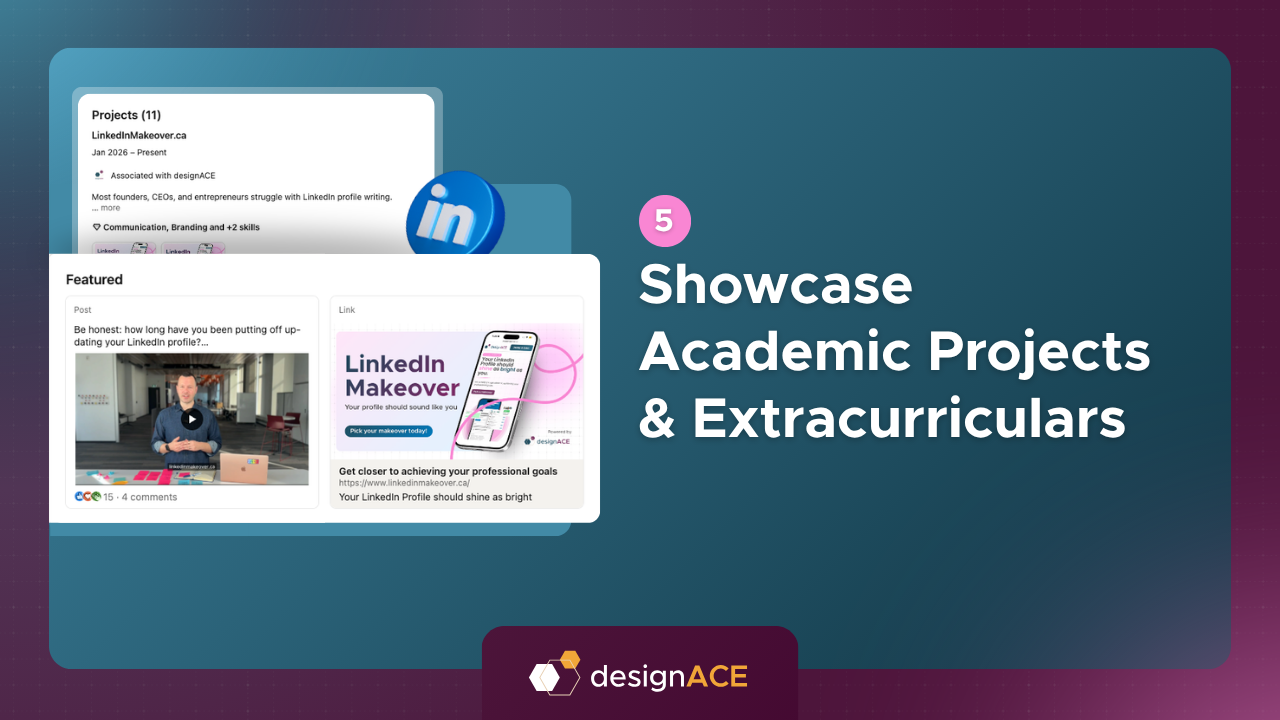
Not having formal work experience doesn't mean you have nothing to put on LinkedIn. Academic projects, student organizations, volunteer activities, competitions, research, campus leadership, and other extracurricular experiences can demonstrate skills that employers are looking for.
Use relevant profile sections such as Projects, Features, and Organizations to give these experiences more context. Instead of writing "Member of Marketing Club," explain what you actually contributed, such as helping organize an event, developing promotional materials, conducting research, or supporting the club's social media strategy. Updating these sections regularly means you won’t have to remember what you did or contributed to later, when memories might be foggy.
Focus on outcomes wherever possible. If you organized a student event, mention how many people attended; if you led a group project, explain what you produced; if you managed a student organization's social media account, describe the content or campaign you created. These details transform an activity from a line on a profile into evidence of what you can actually do.
Courses and certifications can also strengthen your profile when they're relevant to your career direction. If you're taking a course in Google Analytics, Excel, project management, digital marketing, data analysis, or another skill related to your target role, consider adding the certification or credential to your profile when appropriate. This isn’t about collecting certificates for the sake of filling your profile, but to show that you're actively developing skills that support your professional direction.
6. Connect With Alumni and Industry Peers
Connect With Alumni and Industry Peers
One of the most valuable parts of learning how to use LinkedIn before graduation is learning how to turn your university network into a professional network. Your school isn't only a place where you attend classes, but it can also be a starting point for finding people who have already taken the career path you're considering.
Visit your university's LinkedIn profile and look for alumni or graduates working in industries and companies that interest you. LinkedIn's search and profile tools can help you identify people whose experience is relevant to your goals, giving you a more natural reason to reach out than sending connection requests to completely random professionals.
When you contact an alumnus, lead with curiosity and respect. You could mention that you're studying the same program, explain that you're exploring their industry, and ask whether they'd be open to a brief informational conversation about their career path.
A personalized message will always be stronger than a generic "I'd like to add you to my professional network." Before sending a request, spend a few minutes looking at the person's profile and recent activity so you can identify something specific that genuinely interests you.
This is also where our free LinkedIn Playbook Series 3: Outreach That Feels Human can be useful. It focuses on connection requests, follow-ups, and building professional relationships without making your outreach feel automated or overly sales-focused.
7. Request Recommendations and Endorsements
Request Recommendations and Endorsements
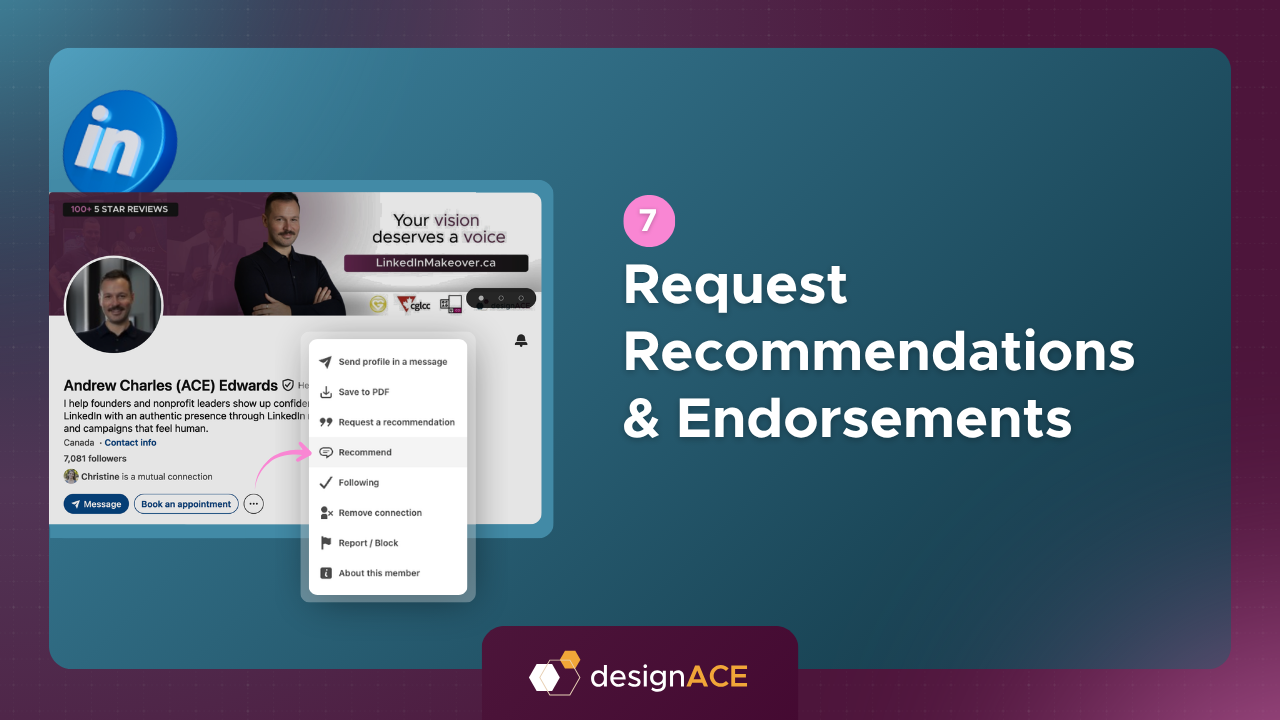
Recommendations can provide social proof that your profile alone can't create. For a student, these don't have to come from a CEO or senior executive; a professor, internship supervisor, mentor, volunteer coordinator, or student organization adviser may be able to speak meaningfully about your work ethic, collaboration, leadership, or specific contributions.
When asking for a recommendation, make the request personal and give the person some context about what you'd like them to highlight. For example, if you're applying for marketing internships, you might ask a professor to mention your contribution to a research project, your communication skills, or the way you worked with a team.
Skill endorsements can also help reinforce the capabilities you want associated with your profile. LinkedIn allows members to add skills and receive endorsements from people in their network, so make sure the skills you list actually reflect the abilities you're developing rather than adding every possible keyword.
You can also build the habit of giving before asking. If a classmate did an excellent job leading a project or a peer demonstrated a particular skill, endorse them where appropriate. Professional credibility is built through relationships, and small actions like these can help you develop a more thoughtful approach to networking.
Build Your LinkedIn Profile Before You Need It

Build Your LinkedIn Profile Before You Need It
The best time to start using LinkedIn as a college student is before you're urgently looking for a job. A profile that develops alongside your education gives you space to document projects, build connections, earn recommendations, complete relevant courses, and refine your professional direction gradually.
You also don't need to do everything in one afternoon. Start with your photo, banner, headline, About section, and custom URL, then add projects, organizations, certifications, and recommendations as you gain experience. From there, start following professionals and organizations in your target industry and engage thoughtfully with content that helps you learn.
If you want to go beyond your profile and start creating a professional presence through content, LinkedIn Playbook Series 2: Content That Connects can help you think about what to share and how to connect your content to your professional identity.
Quick Tips: A Simple 30-Day LinkedIn Growth Plan
You don't need a complicated LinkedIn strategy before graduation. Start with these practical actions:
Complete your profile: Add a photo, banner, headline, About section, education, skills, projects, and relevant certifications.
Use career-focused keywords: Include the roles, skills, and industries you're genuinely interested in throughout your profile.
Connect intentionally: Prioritize alumni, professors, peers, industry professionals, and people whose work you genuinely want to learn from.
Document your progress: Add projects, awards, courses, leadership experiences, and certifications as you complete them.
Engage before asking: Comment thoughtfully on industry content and learn from professionals before sending a connection request.
Keep your profile current: Update it whenever you gain a new skill, complete a project, or clarify your career direction.
Final Thoughts: Start Building Your Professional Identity Before Graduation
You don't need years of experience to make LinkedIn work for you. As a college student, you already have experiences, skills, interests, projects, and relationships that can form the foundation of a professional identity. The earlier you start documenting and communicating them, the easier it becomes to build credibility and confidence as you move towards graduation.
If you're starting from zero or aren't sure how to turn your student experience into a stronger LinkedIn profile, book a free LinkedIn Audit and we’ll give you a practical starting point. And if you'd prefer a done-for-you approach, LinkedInMakeover.ca, powered by designACE, can help you build and optimize your profile around your goals, experience, and career direction so you're ready for the opportunities ahead.
Frequently Asked Questions (FAQs)
-
You can highlight academic projects, coursework, student organizations, volunteer work, leadership positions, certifications, competitions, research, and other experiences that demonstrate relevant skills. Focus on what you contributed, what you learned, and the results you achieved rather than simply listing activities.
-
Yes. Creating your profile before graduation gives you time to build your professional network, document experiences, connect with alumni, and improve your profile before you begin applying for jobs or internships. You don't need to wait until you have a full-time role to establish your professional presence.
-
Relevant certifications can strengthen a student profile by showing initiative and developing expertise beyond the classroom. Prioritize certifications that support your target career or demonstrate practical skills rather than collecting credentials simply to make your profile look fuller.
-
Yes. If you want professional help turning your education, projects, skills, and career goals into a stronger LinkedIn presence, LinkedInMakeover.ca (powered by designACE) offers profile optimization designed around your positioning and goals. A free LinkedIn Audit is also a useful way to identify areas that could be improved before deciding whether you need a full makeover.
Useful Blogs

LEVEL UP YOUR LINKEDIN PROFILE
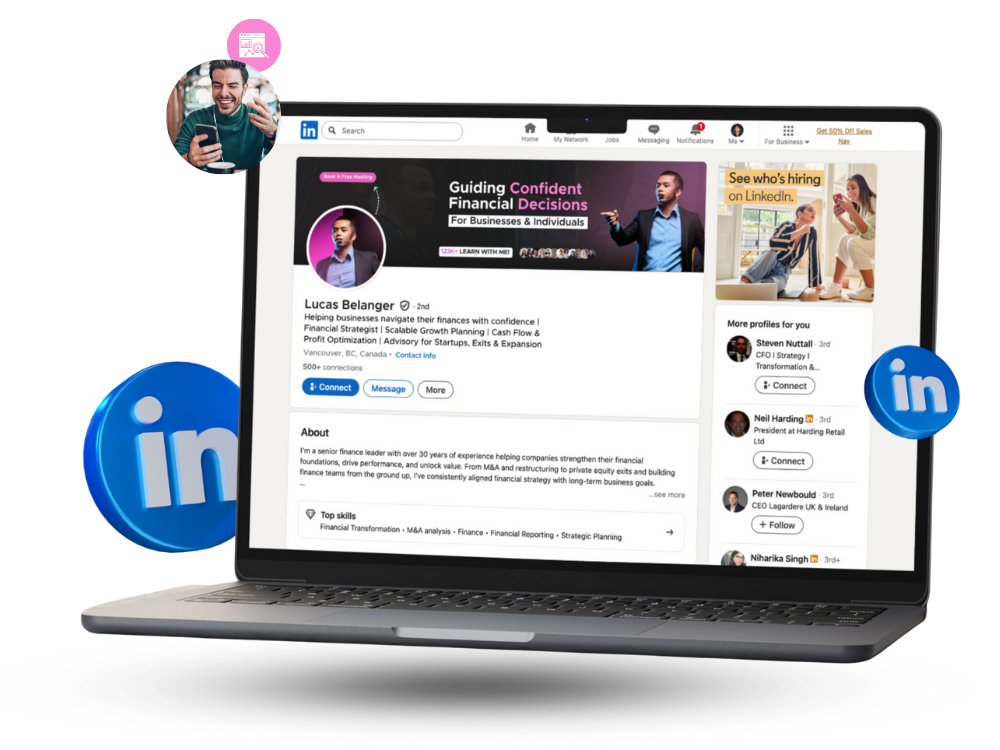
Enhance your LinkedIn presence and attract more opportunities with a profile designed to stand out.
PICK YOUR MAKEOVER
Learn how to build a standout LinkedIn profile as a new graduate by showcasing your skills, projects, education, and potential.