
No Experience? How to Make Your LinkedIn Profile Stand Out as a New Graduate

How to Make Your LinkedIn Profile Stand Out as a New Graduate
Graduating without much formal work experience can make LinkedIn feel intimidating. You may look at profiles filled with internships, job titles, certifications, and years of experience and wonder what you could possibly add when you're still looking for your first opportunity.
The good news is that no formal work experience doesn't mean you have nothing to show. Your education, academic projects, volunteer work, extracurricular activities, certifications, technical skills, and the problems you've learned to solve can all provide evidence of your potential. LinkedIn itself recommends that students and early-career professionals use sections such as Projects, Courses, Organizations, and Honours & Awards to showcase achievements beyond traditional employment.
In this guide, you'll learn what to put on LinkedIn if you have no professional work experience, how to make a LinkedIn profile stand out as a fresh graduate, and how to turn your academic background into a professional story that recruiters can understand. We'll cover your profile's top section, ‘About’ section, contact information, practical experience, skills, credibility, and networking. You can also download our free four-part LinkedIn Playbook to help you get started with LinkedIn.
Why Starting Your Career Begins on LinkedIn

Start With a Clear LinkedIn Goal
LinkedIn is a professional networking platform where you can present your professional identity, discover opportunities, connect with people in your industry, and stay informed about the work happening in your field. For new graduates, it can function as both a professional profile and a networking tool, giving recruiters and employers another way to understand who you are beyond a submitted résumé. LinkedIn describes a profile as a place to manage your professional brand, communicate your qualifications and interests, and help the right people discover you (LinkedIn, 2026).
That matters when you're entering the workforce because your LinkedIn profile can answer questions a résumé sometimes cannot. It can show what you're interested in, what you've worked on, what skills you're developing, and what kind of opportunity you're looking for. LinkedIn also provides opportunities to connect with recruiters, alumni, classmates, mentors, and professionals whose careers can help you understand where you want to go next.
Most importantly, don't approach your profile as an attempt to disguise your lack of experience. Instead, use it to make your potential visible. A strong new-graduate profile doesn't pretend you're an experienced professional; it gives employers enough evidence to see how your education and experiences could translate into value.
1. Optimize the Top Section
Optimize the Top Section
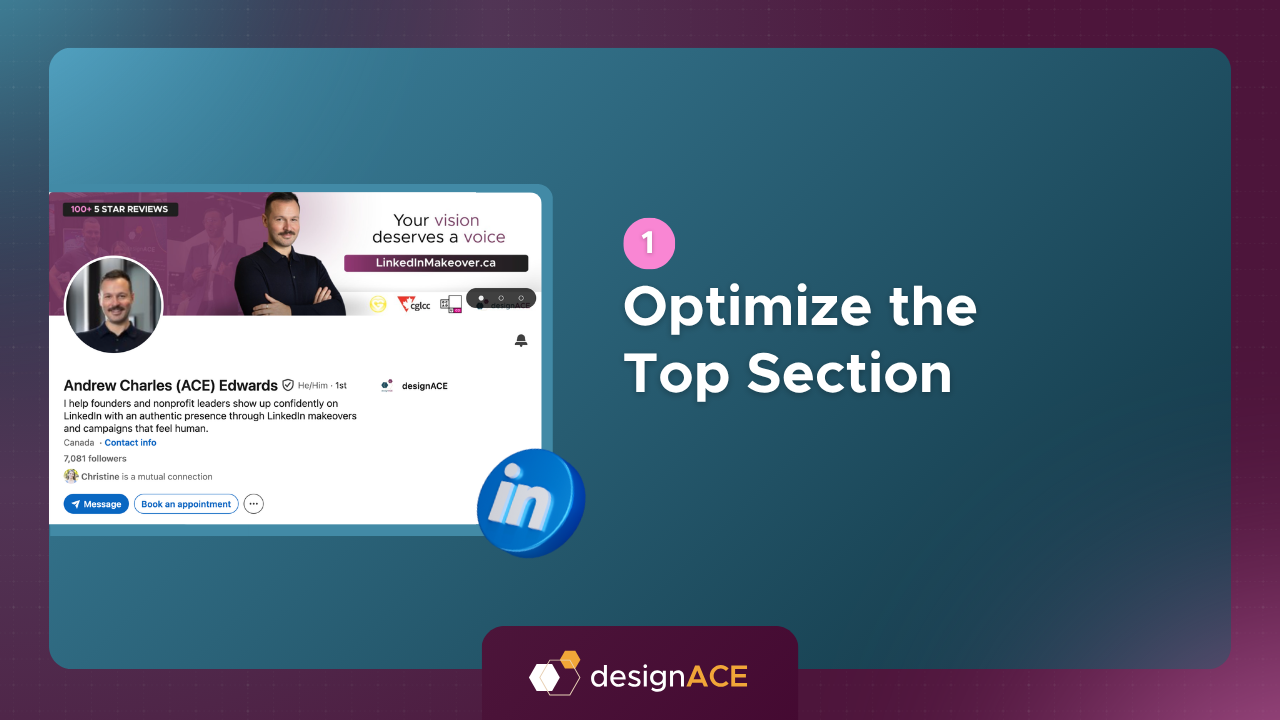
The top section of your LinkedIn profile is the first thing someone sees, so it needs to communicate your professional direction quickly. LinkedIn's introduction section includes elements such as your profile photo, background photo, headline, education, location, and contact information, making it one of the most important areas to get right.
Start With a Professional Profile Photo
A professional photo doesn't require a professional photographer. Choose a clear, current image with good lighting, a relatively simple background, and clothing that makes sense for the industry you're targeting. You want to look approachable and prepared rather than overly formal simply for the sake of looking "professional."
Your photo also helps make your profile recognizable when you appear in searches, comments, or connection requests. LinkedIn currently states that members with a profile photo can receive up to twice as many profile views, so this small addition can have a meaningful effect on how discoverable your profile is.
Create a Banner That Supports Your Career Direction
Your banner is an opportunity to communicate something visually that your headline cannot. A clean design related to your field, an area of interest, or a professional theme can make an otherwise empty profile feel more intentional.
You can create a simple banner using templates from Canva without needing advanced design skills or use the free Canva template we designed to help you stand out. Keep the design simple enough that it doesn't compete with your profile photo and headline.
Write a Headline That Says More Than "Recent Graduate"
A headline such as "Recent Graduate Seeking Opportunities" tells people where you are in your career, but it doesn't tell them what you can offer. Your headline has limited space, so use it to combine your education or professional identity with the role, skills, or field you want to be associated with.
For example, instead of:
Business Administration Graduate | Looking for a Job
you could write:
Business Administration Graduate | Marketing & Market Research | Aspiring Digital Marketer
The second version gives recruiters more context and includes keywords related to potential opportunities. LinkedIn recommends using relevant keywords and phrases that align with the roles you're pursuing, while also maintaining an informative and descriptive headline.
Be careful not to turn your headline into a keyword dump. LinkedIn specifically advises against keyword stuffing and recommends using multiple relevant terms naturally throughout an accurate, complete profile.
2. Tell Your Story in the About Section

Tell Your Story in the About Section
Your About section is particularly valuable when you don't have an extensive employment history because it gives you space to provide context. Instead of leaving recruiters to interpret a list of courses and activities, you can explain what interests you, what you've learned, what you can contribute, and where you want to go next.
LinkedIn recommends using the About section to communicate your mission, motivation, and skills. Its guidance for profile summaries also suggests that discussing what drives you professionally can be especially useful when you're early in your career and don't yet have extensive work experience.
Start With Your Story
Begin with why someone should choose to work with you, without repeating your résumé. Think about why you chose your field of study and what made you interested in pursuing it. Perhaps a class introduced you to a problem you wanted to solve, a university project made you realize that you enjoy research, or volunteering showed you that you want to work in a particular sector. A straightforward explanation of what you're interested in, what you're learning, and what you hope to contribute can be much more effective than trying to sound like a seasoned executive.
Highlight Your Skills
Your About section should make your relevant skills easy to understand. Include technical abilities such as Excel, Python, Adobe Creative Suite, data analysis, research, or social media alongside transferable skills such as communication, teamwork, project management, problem-solving, and presentation.
Whenever possible, connect a skill to evidence. Instead of saying you're "a strong communicator," explain that you presented a research project to a class, led a student organization, or developed a campaign as part of a group assignment. LinkedIn similarly recommends using your profile to showcase relevant skills and experiences rather than simply listing qualifications.
End With the Direction You Want to Take
Your About section should also help people understand what you're looking for now. If you're seeking an entry-level marketing position, an internship, graduate program, research opportunity, or another specific path, say so clearly.
Being specific is better than writing "I'm open to anything." A clear direction helps recruiters and other professionals understand where you might fit and gives your network a natural reason to think of you when an opportunity appears.
3. Keep Your Contact Information Current

Keep Your Contact Information Current
It sounds basic, but your LinkedIn profile should make it easy for the right person to contact you. Check that your email address and other relevant contact details are current and that you are comfortable with the level of information you choose to make available.
LinkedIn includes contact information within the profile's introduction area, and its current profile guidance encourages members to keep their information complete and representative of their professional identity.
For a new graduate, this can be especially important when you're actively applying for roles or networking with professionals. If someone discovers your profile through a university connection, event, comment, or recruiter search and wants to follow up, don't make them hunt for a way to reach you.
4. Show Practical Experience
Show Practical Experience
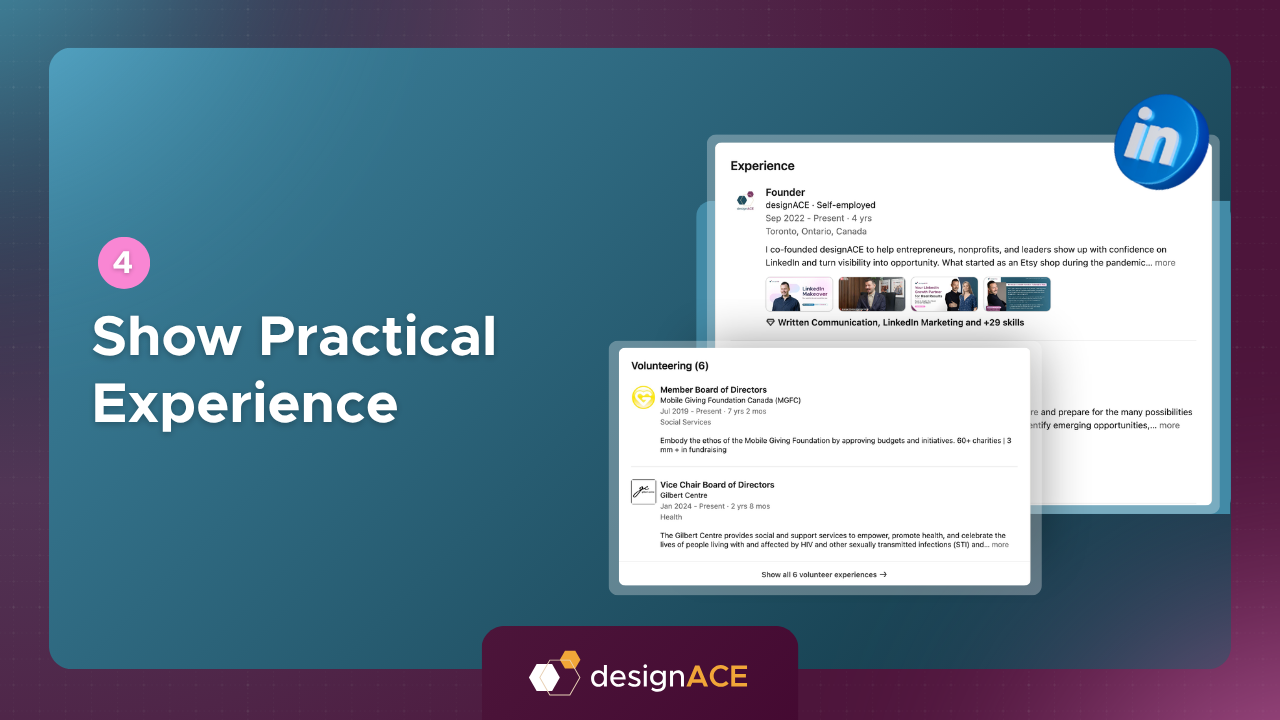
This is where many new graduates sell themselves short. When you think about "experience," you may be thinking only about a paid, full-time job, but employers can learn a great deal from projects, internships, volunteer work, student organizations, freelance assignments, research, and other experiences where you've actually applied your skills.
LinkedIn specifically notes that people with little or no work experience can use profile sections to highlight classes, accomplishments, extracurricular activities, projects, and other evidence of their abilities. Its student guidance also says experience does not have to be paid or full-time to demonstrate relevant skills.
Turn Projects Into Evidence
A capstone project, research paper, group assignment, app, marketing campaign, presentation, portfolio piece, or case study can become evidence of your capabilities. Rather than simply writing "Completed a final-year marketing project," explain the problem you were addressing, what you contributed, what tools you used, and what the project produced.
For example, instead of:
Marketing Project: Created a social media strategy.
Try:
Marketing Strategy Project: Developed a social media strategy for a simulated retail brand, including audience research, content pillars, platform recommendations, and a four-week content calendar.
The second example gives someone a much clearer idea of what you can actually do. You're no longer asking an employer to take your word for it; you're showing them the type of work you've already practised.
Don't Leave Volunteer and Extracurricular Work Out
Volunteer work can also demonstrate professional capabilities. Organizing an event, managing communications for a student club, coordinating volunteers, fundraising, designing promotional materials, or leading a committee can all reveal skills that employers value.
LinkedIn's student resources specifically recommend including organizations, volunteer experience, projects, courses, honours, and awards as ways to demonstrate capabilities outside traditional employment.
The key is to describe what you did and why it mattered. A list of memberships doesn't tell much of a story, but explaining that you coordinated a five-person team, promoted a campus event, or helped organize an initiative gives recruiters something tangible to evaluate.
Use Action and Outcome-Focused Language
When describing your experience, avoid relying entirely on phrases such as "responsible for" or "helped with." Use action verbs that communicate what you actually contributed, such as developed, analyzed, designed, organized, researched, presented, coordinated, created, managed, or implemented.
Then add an outcome where you have one. If you increased attendance, completed a project ahead of schedule, produced a portfolio, presented research, managed a social account, or delivered something for a real organization, include that detail. Even small outcomes can make an early-career profile more concrete.
5. Build Credibility and Network
Build Credibility and Network
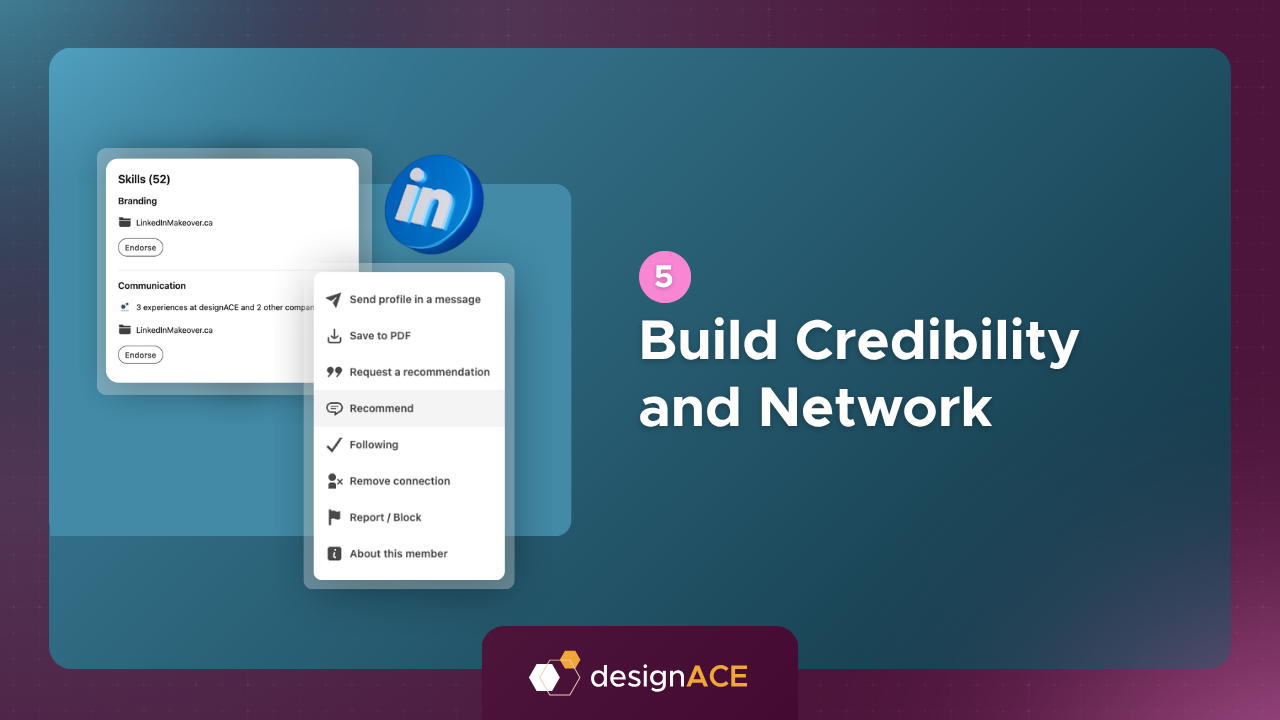
Once the foundation of your profile is in place, start building evidence that other people can recognize. Your skills, recommendations, activity, and professional connections can collectively show that you're engaged with your field rather than simply waiting for someone to give you your first job.
Add Relevant Skills
Choose skills that are genuinely connected to the roles you're pursuing. Rather than adding every skill you have ever encountered, prioritize the capabilities you want recruiters to associate with you.
Look at job descriptions for entry-level roles you're interested in and pay attention to recurring skills and terminology. This can help you understand how employers describe the capabilities they're seeking and which ones you should develop or highlight, provided they accurately represent what you can do.
Ask Professors, Mentors, and Supervisors for Recommendations
A recommendation can provide third-party evidence of your capabilities, which is particularly useful when your professional history is still developing. A professor might speak about your research or communication skills, while an internship supervisor could discuss your reliability, initiative, or contribution to a project. Don't wait until you have a long list of recommendations. Start with people who have directly observed your work and can provide specific examples of your strengths.
Stay Visible Through Meaningful Activity
Your profile doesn't have to sit untouched after you finish building it. Follow companies, professionals, industry publications, and organizations related to your career interests, then engage thoughtfully with content that genuinely interests you.
You can also share something you've learned from a course, reflect on a project you've completed, or discuss an industry topic you're researching. You don't need to position yourself as an expert; showing that you're curious, informed, and actively learning can help people understand what you're interested in.
This is where networking becomes more useful than simply collecting connections. Commenting thoughtfully on an industry professional's post can give you a natural introduction, while sharing something relevant can create opportunities for conversation over time.
Quick Tips for Making a New-Graduate LinkedIn Profile Stand Out
If you're starting from scratch, don't try to rebuild everything in one sitting. Work through this checklist:
Use a professional photo and relevant banner that make your profile feel complete.
Replace a generic student or graduate headline with one that communicates your target field and relevant skills.
Write an About section in your own voice that explains your interests, strengths, and career direction.
Add evidence, not just claims: include projects, research, volunteer work, extracurriculars, certifications, and other relevant experiences.
Use job descriptions as research: identify recurring skills and keywords, but only include terms that accurately describe you.
Ask for recommendations from professors, supervisors, mentors, or others who have directly worked with you.
Stay active: follow relevant people and organizations and participate in industry conversations.
Keep improving your profile: your LinkedIn profile should evolve as you gain experience, certifications, projects, and clearer career goals.
A complete and accurate profile is more valuable than trying to make yourself appear more experienced than you are.
Final Thoughts
Starting your career without much formal experience can feel like a disadvantage, but your LinkedIn profile doesn't have to read like an empty résumé. Your education, projects, skills, volunteer work, certifications, and interests can provide meaningful evidence of what you've learned and what you could contribute to an employer.
The goal isn't to make your profile look like someone else's. It's to make your own potential easier to see. If you're struggling to turn your academic and early-career experiences into a clear professional story, working with a LinkedIn specialist can give you an outside perspective on your positioning, messaging, and profile structure. A professional makeover can be particularly helpful when you know you have something to offer but aren't sure how to communicate it effectively.
For those who want a done-for-you LinkedIn profile makeover, LinkedInMakeover.ca, powered by designACE, can help translate your experience, skills, and career goals into a more strategic profile. The service focuses on positioning and clarity rather than simply making your profile sound more impressive, helping you put your strongest evidence in front of the people you want to reach.
Frequently Asked Questions (FAQs)
-
Start with what you do have: your education, relevant courses, academic projects, research, volunteer work, student organizations, certifications, skills, awards, and extracurricular activities. Focus on the skills demonstrated through those experiences and describe what you actually contributed rather than apologizing for not having formal employment.
-
Make your profile specific to the type of opportunity you want. A clear headline, purposeful About section, relevant keywords, practical examples of your work, and evidence from professors or supervisors will generally create a stronger impression than simply listing your degree and writing "seeking opportunities."
-
You should include relevant projects on your profile, but don't misrepresent academic work as employment. LinkedIn provides sections such as Projects and Education specifically for showcasing this type of experience, and its guidance recommends using projects to demonstrate how you've applied classroom learning.
-
Start by making your profile complete, accurate, and aligned with the roles you're targeting. Use relevant keywords naturally, clearly communicate your career direction, showcase practical evidence of your skills, and remain active in relevant professional conversations so your profile isn't simply a static résumé. LinkedIn states that complete profiles can improve discoverability and search appearances.
-
It can be, particularly if you understand your career direction but struggle to communicate your value. A professional can provide an outside perspective on your positioning, identify opportunities to improve your profile, and help turn academic or early-career experiences into clearer professional messaging. The important thing is to choose support that focuses on your actual goals and experience rather than simply filling your profile with generic keywords.
Useful Blogs

LEVEL UP YOUR LINKEDIN PROFILE
Enhance your LinkedIn presence and attract more opportunities with a profile designed to stand out.
PICK YOUR MAKEOVER
Learn how to build a standout LinkedIn profile as a new graduate by showcasing your skills, projects, education, and potential.