LinkedIn Analytics Explained: How to Use Metrics to Grow Your Profile, Content, and Opportunities
LinkedIn analytics can tell you exactly what's working, what's not, and where your next opportunity is coming from. Yet most professionals never look at the data.
One of the biggest advantages of LinkedIn is that it provides a wealth of data about how people interact with your content, profile, and company page. Every impression, click, comment, share, profile view, and search appearance tells a story. When you know how to interpret those signals, you can make more informed decisions about your content strategy, profile optimisation, and professional brand.
I like to think of LinkedIn analytics as a feedback loop. Rather than wondering whether a post resonated, whether your profile is attracting the right audience, or whether your content is supporting your business goals, the data provides answers. It allows you to move from trial and error to continuous improvement.
What You’ll Learn
We'll break down the LinkedIn metrics that matter most, explain how to use personal profile and company page analytics, and explore practical ways to turn data into action. You'll also learn how to measure progress, optimise your content strategy, improve LinkedIn SEO, and use analytics to support your professional and business goals.
You can start learning LinkedIn Analytics and metrics by downloading our free LinkedIn Playbook Series 4: Metrics That Matter. The free playbook includes a step-by-step guide, quick tips, and activities to help you better understand metrics.
Understanding the LinkedIn Metrics That Actually Matter

Understanding the LinkedIn Metrics That Actually Matter
LinkedIn provides a surprising amount of data, but not all metrics carry the same weight. Some tell you how many people saw your content, while others reveal whether your content actually resonated. Understanding the difference between these metrics helps you move beyond surface-level numbers and focus on the signals that drive professional visibility, engagement, and opportunities.
The goal isn't to track every number available, but to identify the metrics that align with your objectives and use them to make smarter decisions about your profile, content, and overall LinkedIn strategy.
Impressions vs Reach: What's the Difference?
Two of the most commonly misunderstood LinkedIn metrics are impressions and reach. While they're often mentioned together, they measure two very different things.
Impressions refer to the total number of times your content appears in someone's feed. If one person sees your post three separate times, that counts as three impressions. This metric helps you understand overall visibility and how often LinkedIn is surfacing your content to users.
Reach, on the other hand, measures the number of unique individuals who have seen your content. Using the same example, if one person sees your post three times, reach would still count that as a single user. Reach provides a clearer picture of how broadly your content is being distributed across LinkedIn.
Engagement: The Metric Behind Meaningful Interaction
Visibility is important, but engagement is often where the real insights begin.
Engagement measures how people interact with your content once they see it. It helps answer a critical question: did your content simply appear in someone's feed, or did it motivate them to take action?
LinkedIn engagement can include several types of interactions, including likes, comments, shares, saves, and clicks. Each action provides a different signal about how people perceive your content.
Likes are often the easiest form of engagement. They indicate that someone found your content interesting, relevant, or worth acknowledging. While valuable, likes typically require the least effort from users.
Comments often provide deeper insight because they require a greater level of investment. When someone takes the time to respond, ask a question, or share a perspective, it suggests that your content sparked a conversation rather than simply attracting attention.
Shares can be particularly powerful because they expand your content beyond your immediate audience. When someone shares your post with their own network, they're effectively endorsing your content and helping increase its visibility.
Clicks are another important engagement signal. Whether someone clicks a link, opens an image, visits your profile, or selects "See More" to continue reading, clicks indicate curiosity and interest. They often reveal whether your content is compelling enough to encourage deeper interaction.
Hidden LinkedIn Metrics Worth Tracking
While impressions and engagement tend to receive the most attention, some of LinkedIn's most valuable insights come from metrics that many professionals rarely monitor.
These hidden indicators can help you understand not only how people interact with your content today, but also how your content influences future visibility and discoverability.
Saves
A save occurs when someone bookmarks your content to revisit later. While saves may not receive the same attention as comments or shares, they're often one of the strongest indicators that your content provided genuine value.
Most people only save content when they believe it will be useful in the future. This could be a guide, framework, checklist, insight, or resource worth returning to. In many cases, a saved post signals that your content was not only consumed but considered important enough to keep.
Dwell Time
Dwell time refers to the amount of time users spend viewing your content before scrolling away.
Unlike likes or comments, dwell time doesn't require any visible action. A user may never engage with your post publicly, but if they spend time reading it, LinkedIn interprets that as a signal that the content is relevant and interesting.
Search Appearances
Search appearances are one of the most overlooked metrics on LinkedIn, yet they can provide valuable insight into how people discover your profile.
This metric shows how often your profile appears in LinkedIn search results. It can also provide clues about the keywords and professional topics associated with your profile, helping you understand whether you're being found by the right audience.
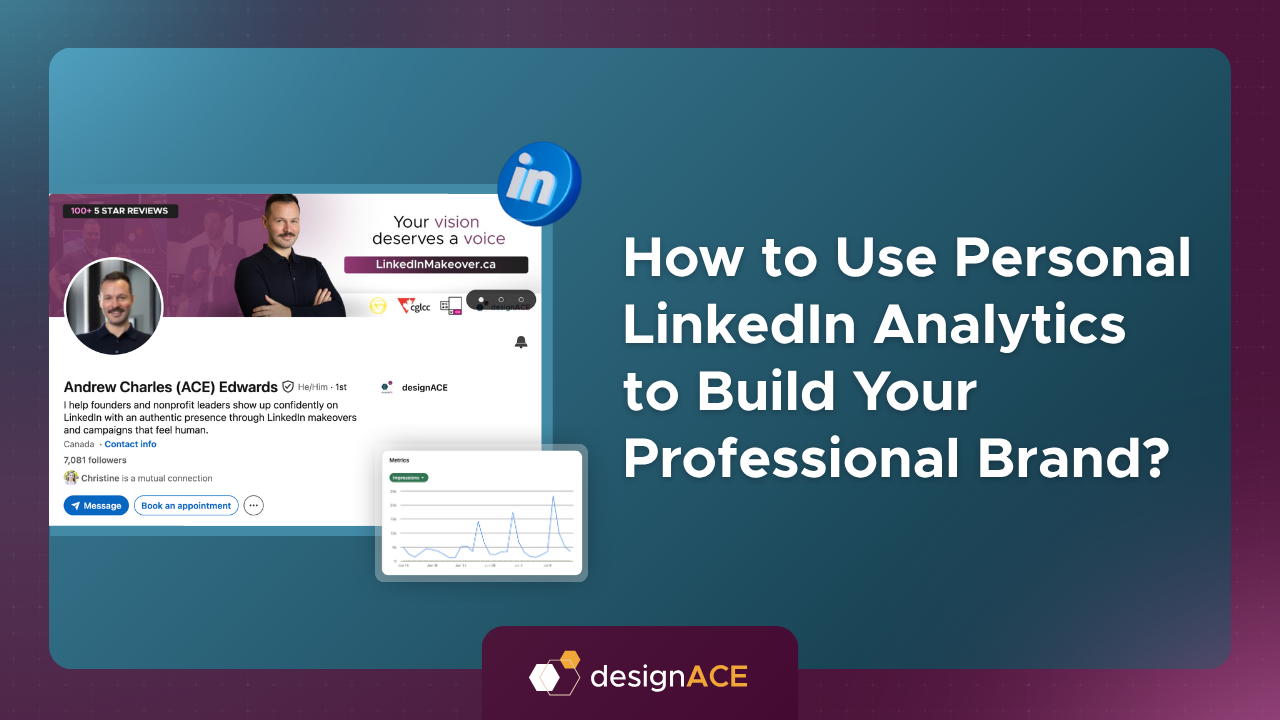
How to Use Personal LinkedIn Analytics to Build Your Professional Brand
How to Use Personal LinkedIn Analytics to Build Your Professional Brand
Your personal LinkedIn analytics provide more than just performance data; they offer insight into how people discover you, engage with your expertise, and perceive your professional brand. When reviewed regularly, these metrics can help you strengthen your visibility, refine your positioning, and ensure you're attracting the audience most relevant to your goals.
Rather than focusing solely on follower growth, it's helpful to look at the entire picture. Metrics such as profile views, post performance, search appearances, and audience insights each reveal a different aspect of how your professional presence is performing on LinkedIn.
Profile Views
Profile views are one of the clearest indicators that people are interested enough to learn more about you.
When someone takes the extra step of visiting your profile, it often means that something you've posted, commented on, or shared has captured their attention. While a view doesn't automatically lead to a connection, conversation, or opportunity, it does signal that your visibility is increasing.
Tracking profile views over time can also help identify growth opportunities. If you notice a spike after a particular post, event, or profile update, it's worth examining what triggered the increase. Likewise, if profile views begin to decline, it may indicate that your content is reaching fewer people or that your profile could benefit from a refresh.
Post Performance
Many LinkedIn users evaluate success based solely on likes.
While likes can provide a quick indication of engagement, they rarely tell the full story. A more useful approach is to examine how people interact with your content as a whole.
Comments can reveal which topics are generating discussion. Shares can indicate which ideas people find valuable enough to pass along to their own networks. Clicks can help determine whether your content is encouraging deeper exploration, whether that's visiting your profile, reading an article, or engaging with additional resources.
When reviewing post performance, look beyond individual results and search for patterns. You may discover that educational content consistently generates more engagement than promotional content, or that certain topics attract a more qualified audience.
Search Appearances
Search appearances are one of the most valuable yet underutilised LinkedIn analytics tools.
This metric shows how often your profile appears in LinkedIn search results, providing insight into how discoverable you are on the platform. It can also help you understand whether your profile is associated with the topics, skills, and expertise you want to be known for.
For example, if you're a consultant, coach, recruiter, executive, or industry specialist, search appearances can help determine whether you're being found through the right keywords. If the searches bringing people to your profile don't align with your goals, it may be time to revisit your headline, About section, skills, and experience descriptions.
This is where LinkedIn SEO becomes especially important. The language you use throughout your profile influences how LinkedIn categorises and surfaces your profile in search results. By understanding which terms are driving visibility, you can make strategic adjustments that improve discoverability and attract more relevant opportunities.
Audience Insights
Audience insights help move beyond raw numbers by providing information about the people interacting with your profile and posts. Depending on the data available, you may be able to see details such as industries, job functions, seniority levels, locations, and organisations represented within your audience.
These insights are particularly valuable because they help ensure your content is reaching the people you intend to reach. For example, if your goal is to connect with entrepreneurs, nonprofit leaders, executives, or decision-makers, audience data can help confirm whether your content is attracting those groups.
Over time, audience insights can also help guide your content strategy. If you notice a particular audience segment consistently engaging with your posts, it may be worth creating more content that addresses their interests, challenges, or goals. When your content aligns with the audience you want to serve, LinkedIn becomes a much more effective tool for building credibility, visibility, and professional opportunities.
How to Use Company Page Analytics to Improve Business Results

How to Use Company Page Analytics to Improve Business Results
While personal LinkedIn analytics help you understand how your professional brand is performing, company page analytics provide insight into how your organisation is attracting, engaging, and growing its audience. For businesses investing time and resources into LinkedIn, these metrics can reveal whether your content is reaching the right people and supporting broader marketing, recruitment, or business development goals.
The most effective company pages don't simply publish content and hope for results. They use analytics to understand audience behaviour, identify trends, and make informed decisions about where to focus their efforts moving forward.
Follower Insights
LinkedIn provides demographic information that can include industry, location, job function, seniority, and company size. This data allows you to compare your actual audience with the audience you intend to reach.
For example, if your business primarily serves nonprofit organisations but most of your followers work in unrelated industries, there may be a disconnect between your content strategy and your target audience. On the other hand, if you're consistently attracting decision-makers, business owners, executives, or professionals within your ideal market, that's a strong indicator that your messaging is resonating.
Follower insights are particularly useful when evaluating audience fit. Growth is important, but attracting the right audience is often more valuable than simply attracting a larger one.
Visitor Analytics
Not everyone who visits your company page becomes a follower.
In fact, many visitors are simply exploring, researching, or evaluating whether your business is relevant to their needs. That's why visitor analytics can be just as valuable as follower insights.
Visitor analytics provide information about the people viewing your page, regardless of whether they choose to follow it. These visitors may be potential clients, future employees, referral partners, media contacts, or individuals comparing service providers before making a decision.
Understanding visitor behaviour can uncover opportunities that follower counts alone may miss. If your page is attracting significant traffic but converting very few followers, it may be worth reviewing your company description, featured content, visual branding, or posting strategy to better communicate your value.
Why Engagement Rate Matters More Than Vanity Metrics
It's easy to become fixated on follower counts.
A growing audience can certainly be a positive sign, but followers alone don't tell you whether your content is making an impact. A company page with thousands of followers but very little interaction may be less effective than a smaller page with an active, engaged community.
That's why engagement rate is often one of the most useful metrics to monitor. Engagement rate measures how frequently people interact with your content relative to the audience that sees it. It provides a clearer picture of content quality and audience interest than follower growth alone.
Content Performance by Format
One of the most practical uses of LinkedIn company page analytics is identifying which content formats perform best with your audience.
LinkedIn offers multiple ways to share information, including videos, carousels, images, and text-based posts. While every audience is different, analytics can reveal which formats consistently generate stronger engagement for your organisation.
This approach helps improve efficiency because you're making decisions based on performance rather than preference. What matters most is not what you enjoy creating, but what your audience finds valuable enough to engage with.
Using Analytics to Create Better LinkedIn Content

Using Analytics to Create Better LinkedIn Content
One of the most practical benefits of LinkedIn analytics is that it helps you create content with greater confidence. Rather than constantly wondering what to post next, you can use past performance to guide future decisions and build a content strategy rooted in evidence rather than guesswork.
The goal isn't to chase every trend or obsess over every metric. Instead, it's about understanding what your audience consistently finds valuable and using those insights to improve the quality, relevance, and impact of your content over time.
Double Down on What Works
High-performing content leaves clues.
When a post generates strong engagement, profile views, shares, saves, or clicks, it's worth taking a closer look at why it resonated. Often, successful content reveals topics, formats, or perspectives that align closely with your audience's interests and professional challenges.
For example, you may discover that industry insights consistently outperform company updates, or that educational content receives more engagement than promotional announcements. Others may find that certain storytelling approaches, visual formats, or subject areas repeatedly attract attention.
The objective is not to create the same post repeatedly. Instead, identify the underlying themes that are working and expand upon them. If your audience responds positively to a particular topic, there's often an opportunity to explore related questions, provide deeper insights, or present the information from a different angle.
Stop Spending Time on Content That Doesn't Perform
Analytics can be just as valuable for identifying what not to do.
Every organisation invests time in creating content, and not every post will perform equally well. By reviewing underperforming content, you can better understand where your efforts may not be generating the return you expected.
This doesn't mean a single low-performing post should immediately eliminate a topic from your content strategy. Sometimes timing, audience behaviour, or external factors influence results. However, when certain formats or content themes consistently fail to generate engagement, it's worth asking whether your time could be better spent elsewhere.
Reimagining Your Top-Performing Posts
Creating better content doesn't always require starting from scratch.
In fact, some of your best future content may already exist within your highest-performing posts. Analytics can help identify ideas that resonated strongly with your audience and deserve a second look.
This process isn't about reposting old content word for word. Instead, think about how you can refresh successful ideas with updated information, new experiences, additional examples, or a different perspective. A topic that performed well six months ago may still be relevant today, especially if the industry has evolved or new insights have emerged.
You can also repurpose content across different formats. A popular post might become a carousel, a video, a downloadable resource, or a deeper thought leadership article. By adapting proven ideas rather than constantly inventing new ones, you can maintain consistency while reducing the pressure to create entirely original content every time you publish.
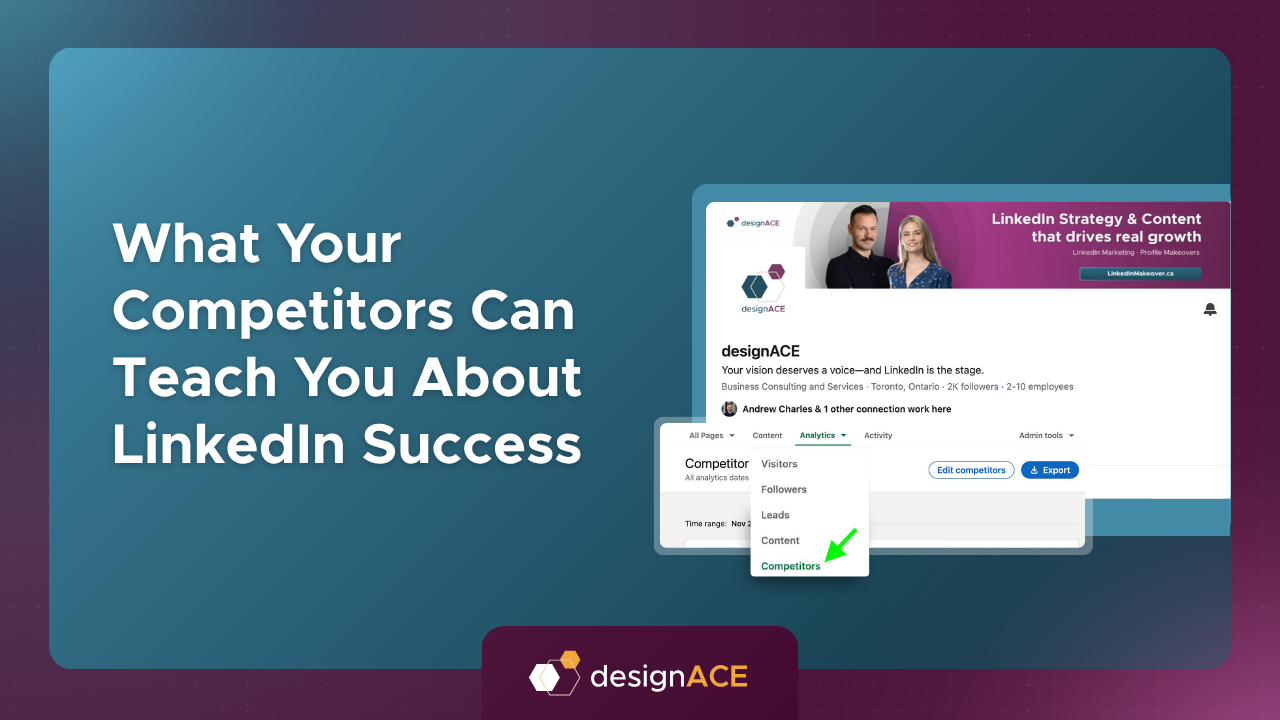
What Your Competitors Can Teach You About LinkedIn Success
What Your Competitors Can Teach You About LinkedIn Success
One of the most overlooked sources of LinkedIn insight isn't your own analytics, it's your competitors'. This doesn’t mean you have to monitor your competitors obsessively, but rather understand what conversations are capturing attention and identify ideas that can help strengthen your own strategy.
Using Competitor Analytics as Inspiration
Many LinkedIn company pages allow you to compare your performance with similar organisations and review top-performing competitor content. Even without formal benchmarking tools, simply observing what generates engagement can provide useful insights.
Look for recurring patterns rather than individual viral posts. Are competitors consistently receiving engagement on industry forecasts, client success stories, educational resources, leadership insights, or behind-the-scenes content? Are certain content formats appearing more frequently among their strongest-performing posts?
Over time, these observations can reveal what topics are resonating within your industry. They can also help you identify gaps in your own content strategy and uncover opportunities you may not have considered otherwise.
The most valuable competitor research isn't about finding shortcuts, but understanding audience interests and learning what conversations are already attracting attention within your space.
Learn, Don't Copy
The temptation when reviewing successful competitor content is to replicate it.
Unfortunately, audiences can quickly recognise when content feels recycled or inauthentic. What works for another professional or organisation may not work the same way for you because your experiences, audience, expertise, and perspective are different.
Instead of copying content directly, focus on understanding why it performed well. Was the topic timely? Did it solve a specific problem? Was the format particularly engaging? Did it provide a unique insight or challenge a common assumption?
Once you understand the underlying reason for its success, you can apply those lessons through your own voice and expertise. Authenticity remains one of the most important differentiators on LinkedIn. Your audience follows you because of your perspective, not someone else's.
Setting SMART Goals for LinkedIn Growth

Setting SMART Goals for LinkedIn Growth
LinkedIn analytics become significantly more valuable when they're tied to a specific objective. Without a clear goal, it's easy to spend time reviewing metrics without knowing whether your performance is actually improving or supporting your professional and business priorities.
That's why goal-setting plays such an important role in any LinkedIn strategy. When you define what success looks like, your metrics become more than numbers—they become indicators of progress.
Turning SMART Goals Into Action
A SMART goal is specific, measurable, achievable, relevant, and time-bound. This framework helps transform broad ambitions into actionable objectives that can be tracked and evaluated over time. You can learn more about this framework using our free LinkedIn Playbook (see series 4, page 4).
Start by identifying the primary metric that aligns with your objective. If your goal involves network growth, track connection growth and profile views.
For example, instead of saying, "I want to grow my network," you might set a goal to add 100 relevant LinkedIn connections within the next 90 days through personalised outreach and consistent engagement.
This creates a clear target and a defined timeframe for measuring success.
If your goal focuses on thought leadership, monitor engagement, saves, and content performance. Keeping the number of metrics manageable helps maintain focus and prevents analysis paralysis.
Next, establish a regular review process. This doesn't need to be complicated. A quick monthly review of your key metrics can reveal trends, highlight opportunities, and help you determine whether adjustments are needed.
The most successful LinkedIn strategies aren't built through constant overhauls. They're built through small, consistent improvements informed by data. When you combine clear goals with regular measurement, analytics become a practical tool for decision-making rather than just another dashboard to monitor.
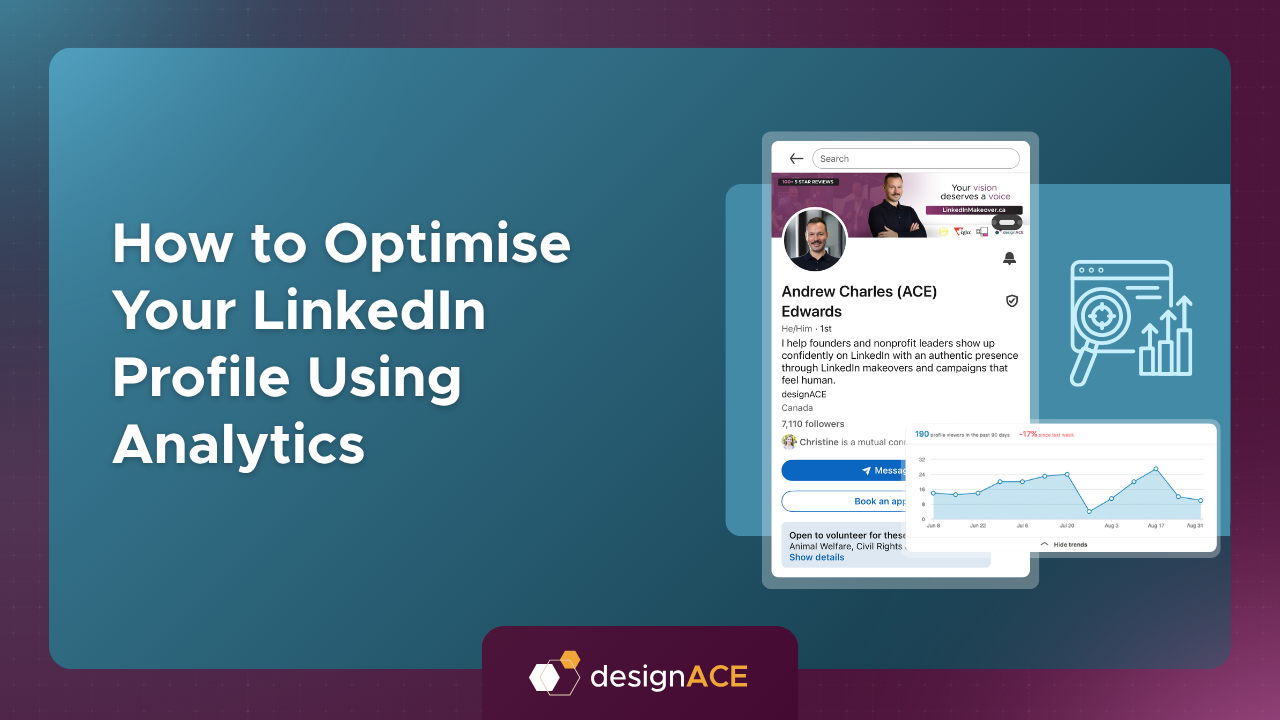
How to Optimise Your LinkedIn Profile Using Analytics
How to Optimise Your LinkedIn Profile Using Analytics
One of the greatest advantages of LinkedIn analytics is that they can help you identify opportunities for improvement before they become larger problems. Rather than waiting until engagement drops significantly or visibility disappears altogether, analytics allow you to monitor performance trends and make proactive adjustments.
Profile optimisation isn't a one-time task. As your experience, goals, industry, and audience evolve, your LinkedIn profile should evolve as well. Analytics provide the feedback needed to determine when it's time for a refresh and what areas deserve attention.
Spotting Performance Dips Early
Not every fluctuation in performance requires immediate action. However, consistent declines across key metrics often indicate that something has changed and deserves investigation.
For example, if profile views begin trending downward over several weeks, it may suggest that your content is generating less curiosity or that your profile is appearing less frequently in searches. Similarly, declining search appearances can indicate that your profile is becoming less discoverable for the topics and keywords you want to be associated with.
The benefit of monitoring these metrics regularly is that you can respond quickly. Instead of waiting months to notice a problem, you can identify changes early and begin testing potential improvements before visibility declines further.
Think of analytics as an early warning system. They won't always tell you exactly what needs to be fixed, but they can alert you when it's time to take a closer look.
Refreshing Your LinkedIn SEO
Just like traditional search engines, LinkedIn uses profile information to determine relevance and decide when to surface profiles in search results. If you're not appearing for the terms that matter most to your professional goals, your profile may need optimisation.
A good place to start is your headline. This section is one of the most visible elements of your profile and plays a significant role in helping LinkedIn understand your expertise. A strong headline communicates what you do, who you help, and the areas where you provide value.
Your About section is equally important. Beyond telling your story, it gives you an opportunity to naturally incorporate relevant keywords related to your industry, services, skills, and professional focus. The more clearly LinkedIn can understand your expertise, the more likely it is to connect your profile with relevant searches.
It's also worth reviewing the keywords used throughout your experience, skills, certifications, and featured content. Small adjustments can sometimes improve discoverability far more than people realise.
Small Changes That Can Create Big Results
One of the most encouraging aspects of LinkedIn optimisation is that meaningful improvements don't always require major changes.
Sometimes a refreshed headline can increase profile visibility. Other times, updating your profile photo, adding new experience, refining your About section, or adjusting a few keywords can help improve search performance and engagement. These small updates signal activity to both LinkedIn and your audience while ensuring your profile accurately reflects your current expertise.
The same principle applies to content. If analytics reveal that certain formats, topics, or approaches consistently perform well, consider making incremental adjustments rather than overhauling your entire strategy. Small experiments often produce clearer insights than dramatic changes.
Use our free LinkedIn Playbook Series 1: Profile Power-Up for a step-by-step guide on how to optimise your LinkedIn profile.
Quick Tips for Making Better Decisions With LinkedIn Analytics
Review analytics weekly
Focus on engagement, not just impressions
Monitor search appearances
Track profile views
Compare content formats
Set measurable goals
Learn from competitors
Test before making major changes
Summary: Great LinkedIn Growth Starts With Better Data
The most successful LinkedIn strategies aren't built on guesswork—they're built on insights. Analytics help you understand what resonates with your audience, what drives visibility, and where opportunities for improvement exist. By measuring before making changes, you can make more informed decisions and focus your efforts on activities that generate meaningful results.
The good news is that growth doesn't require a complete overhaul of your profile or content strategy. Small, data-driven improvements made consistently over time can have a significant impact on your visibility, engagement, and professional brand. Let your analytics guide your next move, keep testing what works, and use every insight as an opportunity to strengthen your presence on LinkedIn.
Frequently Asked Questions (FAQs)
-
The most valuable LinkedIn metrics depend on your goals, but most professionals should monitor profile views, search appearances, engagement rate, reach, impressions, and content performance. Together, these metrics provide insight into your visibility, discoverability, and audience engagement.
-
Impressions measure the total number of times your content appears in users' feeds, including multiple views from the same person. Reach measures the number of unique individuals who saw your content. Reach helps you understand audience size, while impressions help you understand overall visibility.
-
Start by identifying your highest-performing content and looking for patterns in topics, formats, and audience responses. Creating more content around themes that already resonate, while encouraging meaningful interactions such as comments and shares, can help improve engagement over time.
-
High impressions with low engagement often indicate that people are seeing your content but aren't finding a strong reason to interact with it. Reviewing content relevance, audience fit, post structure, and the value being delivered can help improve engagement rates without necessarily increasing reach.
-
Engagement rates vary by industry, audience size, and content type. Rather than comparing yourself to broad benchmarks, focus on establishing your own baseline and consistently improving it over time. Sustainable growth is often a more meaningful indicator than a single percentage.
Useful Blogs


LEVEL UP YOUR LINKEDIN PROFILE
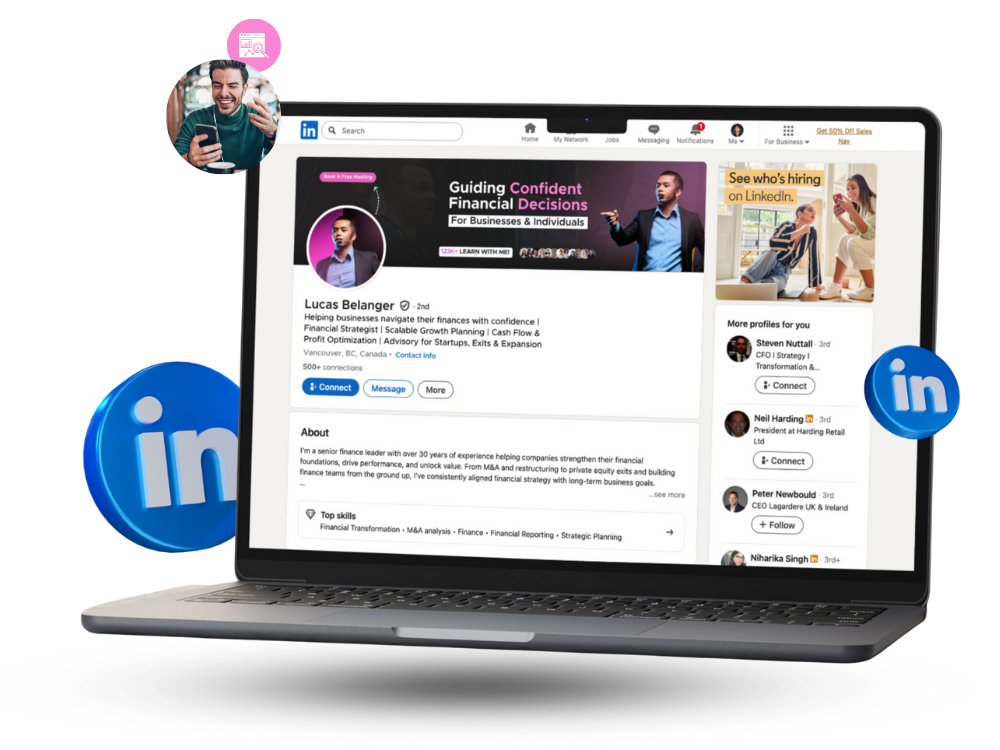
Enhance your LinkedIn presence and attract more opportunities with a profile designed to stand out.
PICK YOUR MAKEOVER