

Beyond the Algorithm: How LinkedIn Builds Trust and Decides Which Posts Get Seen
Have you ever published a LinkedIn post you were proud of, only to watch it receive a handful of reactions? Meanwhile, someone else's seemingly simple observation sparks a thoughtful discussion and reaches people well beyond their immediate network.
It is tempting to blame the LinkedIn algorithm. But reach is rarely just a matter of timing, hashtags, or posting more often. What you share, who finds it relevant, and how people respond all help shape the visibility your content earns.
Think of LinkedIn as a trust network rather than a broadcast channel. Your content needs to give people a reason to stop scrolling, recognize its value, and join the conversation. For small business owners, entrepreneurs, CEOs, and professionals, that means building relationships and not simply publishing promotional updates.
So, how does LinkedIn decide which posts to show, and what can you do to improve your organic visibility?
Let's break down the key signals, the role of professional relationships, and practical LinkedIn strategies that help your content reach the people who matter.
LinkedIn Is a Trust Network, Not a Broadcast Channel
Start With a Clear LinkedIn Goal
LinkedIn has more than a billion members worldwide, but that doesn't mean every post automatically reaches a large audience. The platform has to decide which content is likely to be useful to each person scrolling through their feed.
Instead of treating LinkedIn like a megaphone, think of it as a professional network where relevance and relationships help content travel. Your post is not competing only for attention; it also needs to make sense to the people most likely to see it.
Why relevance matters more than simply posting
LinkedIn's feed-ranking systems use multiple signals to determine which content may be valuable to members. These can include the topic of a post, the author's professional context, a member's interests, and how people interact with similar content. The exact weighting changes over time, so no single tactic guarantees reach.
In its explanation of how the platform has evolved, designACE's LinkedIn algorithm analysis explores why content distribution depends on more than a quick burst of engagement. The practical takeaway is to create posts for a clearly defined audience rather than trying to appeal to everyone.
For example, a consultant who shares a specific lesson about improving client onboarding may attract operations leaders who recognize the problem. A generic post promoting the consultant's services may provide little reason for those same people to stop and engage.
The difference is context. Useful content demonstrates that you understand your audience's challenges before asking for their attention.
The first filter: Does your content feel valuable and authentic?
Your content should offer a clear point of view, useful information, or a relevant professional experience. Generic promotional language, repetitive posts, and content that feels disconnected from the audience can struggle to build meaningful interaction.
This doesn't mean you should never promote your business. It means promotional content works better as part of a broader mix of insights, lessons, practical advice, and authentic stories.
For example, instead of writing, "We offer the best marketing services for growing businesses," explain a common marketing problem, share what you've learned from addressing it, and offer a practical next step. You can still introduce your service, but the reader receives value first.
That approach reflects the principles in designACE's LinkedIn Playbook, Series 2: Content That Connects, which focuses on strong hooks, audience-relevant topics, authenticity, and consistent publishing.
Understand the Signals That Help LinkedIn Distribute Content
Optimise Your LinkedIn Headline to Earn More Profile Clicks
Every time you publish, LinkedIn evaluates signals that help it determine whether your post is appropriate for a particular audience and whether it should receive further distribution. Your content doesn't necessarily move through a rigid, publicly documented sequence, but several practical factors can influence its performance.
The graphic accompanying this article illustrates five useful concepts: spam filtering, engaging comments, network activity, topic relevance, and the warming effect of early engagement.
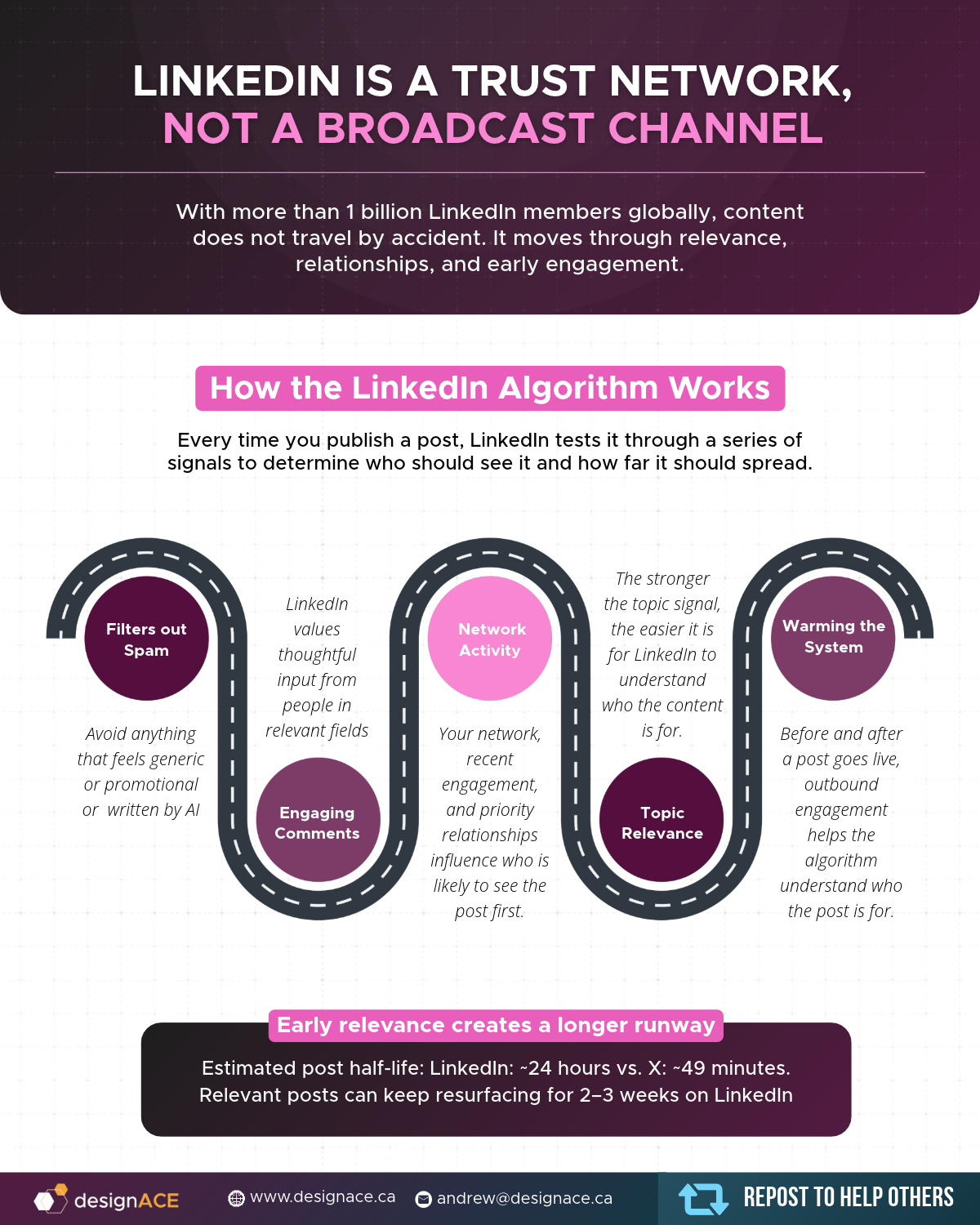
LinkedIn content travels through relevance, relationships, and meaningful engagement, not simply because it has been published.
Signal 1: Content quality and spam filtering
LinkedIn aims to provide a professional feed, so content that appears spammy, misleading, excessively repetitive, or irrelevant can undermine the experience. Avoid publishing the same promotional message repeatedly, using engagement bait, or stuffing posts with unrelated keywords and hashtags.
Instead, make each post purposeful. Share a genuine observation, explain a practical lesson, or help your audience understand an issue affecting their work.
Signal 2: Network activity and meaningful comments
Your LinkedIn network helps determine who may encounter your content, but the number of connections alone doesn't guarantee visibility. The relevance of those connections and their interactions with your posts also matter.
Thoughtful comments can create opportunities for further discussion and expose your ideas to additional people. A response that adds an example or a different perspective contributes more to a professional conversation than a generic "Great post!"
This is why engagement should be treated as a relationship-building opportunity rather than a numbers game.
designACE's LinkedIn Playbook, Series 3: Outreach That Feels Human emphasizes personalized connection requests, meaningful interactions, and follow-ups that help turn professional contacts into genuine relationships.
Signal 3: Topic relevance
LinkedIn needs to understand what your content is about and which members might find it useful. Clear language, a focused topic, and relevant professional context help readers understand your message, and can help the platform interpret it.
For example, if you're a small business owner sharing advice about customer retention, keep the post focused on that subject. Explain the problem, provide a useful insight, and use terminology your intended audience recognizes naturally.
Consistency also helps establish what you regularly contribute to the conversation. You don't need to discuss one topic forever, but publishing around a few connected themes can make your professional positioning clearer.
Signal 4: Early engagement and continued distribution
Early engagement can provide useful feedback about how people respond to a post. When readers find a post relevant enough to comment on, share, or discuss, those interactions may contribute to further visibility.
However, early engagement is not a guaranteed ticket to viral reach. A post can perform well initially and then slow down, while another may continue attracting attention as more people discover it. LinkedIn's exact distribution rules and weighting are not fully public.
Your goal should be to encourage genuine interaction, not manufacture it. Share something worth discussing, respond thoughtfully to comments, and avoid relying on engagement pods or coordinated activity that doesn't reflect real audience interest.
The graphic also references estimated post half-life figures and the possibility that relevant posts may resurface over time. Treat these as illustrative estimates, not fixed platform rules: post lifespan varies by topic, audience, format, and distribution. The useful lesson is that a post's value does not necessarily disappear after its first day.
For a broader overview of feed-ranking factors and practical implications, Hootsuite's explanation of the LinkedIn algorithm provides that LinkedIn's ranking system is specifically designed not to drive viral content. Instead, it prioritizes relevant, high-quality professional knowledge and expertise over quick clicks or reach.
Build LinkedIn Content That Earns Attention and Trust
Design a LinkedIn Banner That Reinforces Your Brand
Understanding the algorithm is helpful, but it won't improve your results unless you translate that knowledge into a practical content strategy. The strongest approach combines audience understanding, useful ideas, meaningful conversations, and a credible professional presence.
Lead with a strong hook and a clear idea
Your opening lines should give readers a reason to continue. You might challenge a common assumption, identify a familiar problem, share a surprising lesson, or ask a focused question.
Compare these two openings:
"We're excited to announce our latest business service."
"Many small businesses invest in visibility before clarifying what they want customers to remember."
The second opening introduces a tension that a relevant audience may want to explore. It gives readers a reason to keep going before introducing a solution.
Keep the rest of the post focused on one main idea. Use short paragraphs, practical examples, and clear takeaways. Images, document carousels, and videos can help communicate complex ideas, but the format should support the message rather than distract from it.
Give your audience something worth responding to
Not every post needs to end with "What do you think?" Instead, invite a response that fits the topic.
For example, a CEO discussing team leadership might ask, "What's one process your team changed that made collaboration easier?" A marketing consultant might invite readers to share the biggest challenge they face when measuring campaign results.
You can also encourage engagement without asking a question. Share a useful template, explain a lesson learned, or offer a perspective that gives readers something to apply.
Then participate in the discussion. Respond to thoughtful comments, acknowledge alternative viewpoints, and ask follow-up questions when appropriate. Your activity helps turn a post from a one-way announcement into a professional exchange.
Optimize your LinkedIn Profile for the attention you earn
A post may introduce someone to your expertise, but your LinkedIn Profile often shapes their next impression. If a reader clicks through to learn more, your headline, About section, featured content, and experience should reinforce the value presented in your post.
This is where LinkedIn Optimization supports content performance. Make it easy for visitors to understand who you help, what you do, and why your perspective is credible.
For executives and business owners, a well-positioned profile can connect personal expertise with the company's broader brand awareness and business goals. A LinkedIn Makeover can help strengthen that connection by improving how your experience, positioning, and value proposition appear to visitors.
Publish consistently without turning your feed into a sales pitch
Consistency helps your audience recognize your perspective over time. However, consistency does not mean publishing every day regardless of quality.
Choose a realistic schedule and a small set of content themes. For instance, a CEO might alternate between industry insights, leadership lessons, customer challenges, and company perspectives. A service-based Entrepreneur might focus on practical advice, common misconceptions, client questions, and lessons from their work.
A planned approach also makes it easier to connect individual posts to a larger LinkedIn campaign. Rather than treating each update as a separate task, you can build a sequence of ideas that reinforces your expertise and supports a business objective.
If planning, writing, and reviewing content consistently is difficult, designACE's LinkedIn Management Services can help businesses develop a strategic publishing approach, maintain a relevant professional presence, and monitor performance over time.
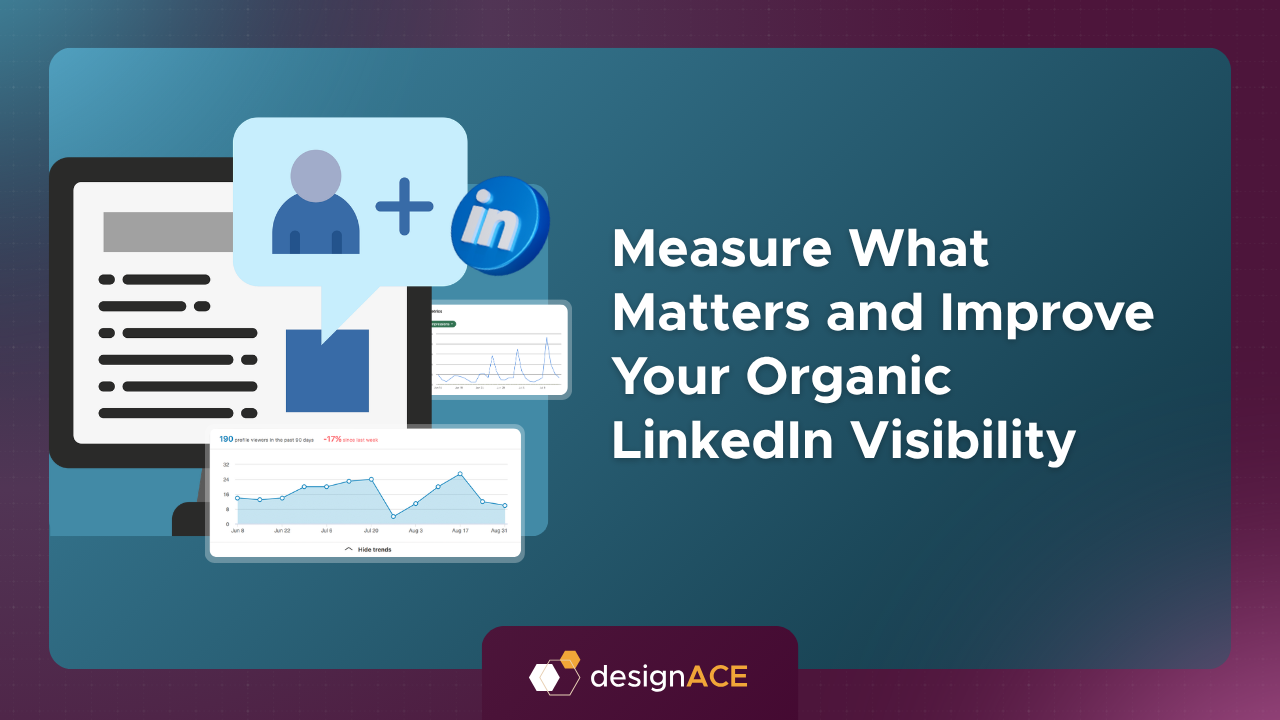
Measure What Matters and Improve Your Organic LinkedIn Visibility
Choose a Professional LinkedIn Profile Photo
You cannot control every factor influencing LinkedIn distribution. You can, however, learn from your performance and improve your content based on evidence.
The key is to evaluate more than the number of reactions a post receives. Look at whether it reaches the right audience, starts meaningful conversations, and supports your broader objectives.
Track impressions, engagement, and audience relevance
Start with a few practical indicators:
Impressions: How often LinkedIn displayed your post.
Engagement: Reactions, comments, reposts, and other available interactions.
Profile visits: Whether people are taking an interest in the person behind the content.
Audience relevance: Whether the people interacting with you match your target audience.
Conversation quality: Whether comments and follow-up interactions show genuine interest or professional relevance.
A post with fewer reactions may still be valuable if it reaches prospective clients or industry decision-makers. Similarly, a high-impression post doesn't automatically produce business results.
To understand these signals and make informed adjustments, use designACE's LinkedIn Playbook, Series 4: Metrics That Matter, which covers LinkedIn analytics, SMART goals, content performance, and data-informed optimization.
Identify patterns instead of chasing viral posts
Review your content regularly and compare similar posts across a consistent period. Look at which topics generate meaningful comments, which formats attract relevant attention, and which posts lead people to explore your profile.
For example, if practical how-to posts consistently generate thoughtful questions from your target audience, consider developing that theme further. If promotional posts receive little response, rethink how you explain the problem your service solves before introducing the offer.
Change one or two elements at a time: such as the hook, topic, format, or call to action—so you can learn what may have influenced the outcome.
Turn visibility into meaningful opportunities
Organic LinkedIn visibility becomes more valuable when it supports a broader objective. Depending on your goals, that could mean strengthening brand awareness, building relationships with potential partners, generating qualified enquiries, or creating opportunities for LinkedIn Lead Generation.
Measure the outcomes that matter to your business, but avoid assuming that every interaction directly causes a sale. A post may contribute to trust and recognition long before someone contacts you.
The most effective LinkedIn strategies combine relevant content, an optimized profile, genuine conversations, and regular performance reviews. For organizations that want a more coordinated approach, LinkedIn Management Services from designACE can help align content planning, publishing, and ongoing optimization with broader marketing goals.
The aim isn't to outsmart the algorithm. It's to become a useful, credible voice in the conversations your audience already cares about.
Quick Tips: A LinkedIn Trust-Building Checklist
Before publishing your next post, ask yourself:
Is this relevant to the people I want to reach?
Does the opening give readers a reason to continue?
Am I sharing a useful insight rather than just promoting my business?
Is the topic clear and focused?
Does my LinkedIn Profile reinforce the credibility of this content?
Can I make time to respond to meaningful comments?
Am I tracking the results that matter, rather than chasing likes alone?
Final Thoughts: Build Trust First, and Let Visibility Follow
LinkedIn is more than a place to publish announcements. It is a professional network where relevant ideas, meaningful interactions, and credible profiles help people discover and remember one another.
You cannot guarantee that every post will travel far, and no single algorithm trick will replace a strong content strategy. But you can improve your chances of reaching the right people by creating useful content, participating in genuine conversations, optimizing your profile, and learning from your analytics.
Ready to build a LinkedIn presence that earns attention and trust?
Explore designACE's LinkedIn Management Services to learn how strategic LinkedIn Content can strengthen visibility, credibility, and professional connections.
Or book a free 30-Minute LinkedIn Audit to identify opportunities to improve your content strategy, audience engagement, and overall LinkedIn presence.
Frequently Asked Questions (FAQs)
-
No. Relevant hashtags may provide additional context, but they cannot guarantee visibility. Prioritize clear writing, useful information, and a topic that fits your audience. If you use hashtags, choose a small number that accurately describes the subject instead of adding unrelated tags.
-
You can correct errors or clarify information, but editing a post is not a guaranteed way to restore reach. First, review the content's relevance, opening, timing, and audience response. Use what you learn to improve future posts rather than repeatedly changing a post in the hope of triggering distribution.
-
There is no universal rule that every post containing an external link will receive less reach. Results can vary with the content, audience, format, and context. If you need to share a link, explain why it is useful and make the post valuable in its own right. Test approaches over time instead of relying on a blanket rule.
-
Both can serve different purposes. A CEO's personal profile can communicate expertise, experience, and leadership perspective, while a company page represents the organization and its offerings. They can complement each other through coordinated content and thoughtful interaction. Choose the approach that best supports your audience and business objectives.
-
AI can help with brainstorming, research organization, and drafting, but performance depends on the value and relevance of the final post—not simply how it was produced. Review generated content for accuracy, originality, and a natural professional voice. Add real experiences and informed opinions so the result reflects your expertise instead of sounding generic.
Useful Blogs

LEVEL UP YOUR LINKEDIN PROFILE
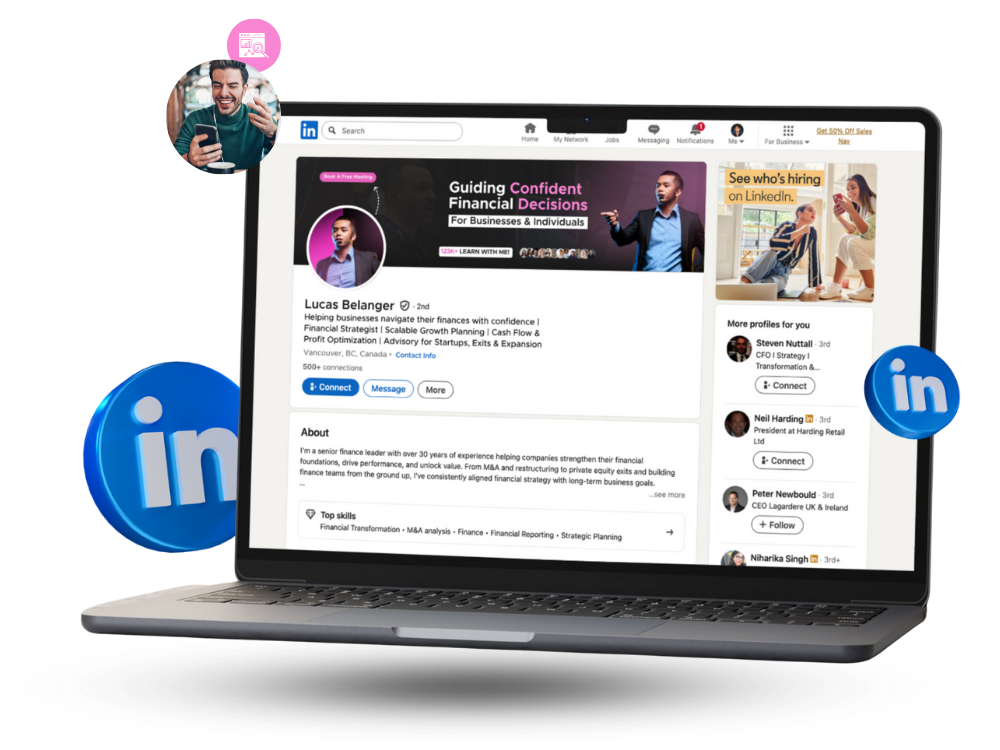
Enhance your LinkedIn presence and attract more opportunities with a profile designed to stand out.
PICK YOUR MAKEOVER
Learn how LinkedIn decides which posts get seen, why relevance and meaningful engagement matter, and how to improve organic LinkedIn visibility with practical content strategies that build trust, strengthen professional relationships, and support business growth.